
Recording a single in the UK costs between £300 and £5,000, depending on studio quality, location, and the services you bring in. A straightforward indie single - studio hire, an audio engineer, mixing, and mastering - typically lands in the £500–£1,500 range. Add a music producer, session musicians, and a promotional push, and you are looking at £3,000–£5,000 or more. The difference between those two numbers usually comes down to one thing: preparation.
Most artists overspend not because recording is expensive, but because they walk in without a plan. They book too little time, forget to budget for mixing, or get hit with revision fees they never anticipated. Build your recording a single budget before you book anything, and you stay in control of both your money and your creative decisions.
This guide covers every stage of the process - from pre-production rehearsals through to release-week promotion. It includes three worked examples at different spend levels, a printable budget tracker, and practical negotiation advice to keep your music production budget on course from start to finish.
The Real Reason Recording Projects Go Over Budget
The most common culprit is simple: artists arrive underprepared. When you have not fully rehearsed your parts, confirmed your arrangement, or thought through your track's structure, studio time becomes expensive thinking time. At £30–£80 per hour, working out a chord change in the live room costs real money.
The second issue is incomplete cost planning. Artists budget for studio hire and assume that covers everything. It almost never does. Mixing is a separate cost. Mastering is separate. Cover artwork, distribution, and any session musicians you need are all separate. A budget built around only the tracking session will fall apart the moment you receive the engineer's invoice.
Studio managers across the UK say the same thing: the artists who get the most from their sessions arrive knowing exactly what they want, with demos ready, parts arranged, and a realistic sense of how long things take. I have heard this repeatedly, and the evidence backs it up every time.
How a Clear Budget Protects Your Creative Vision
Money pressure in the studio is creatively destructive. When you are watching the clock because you have already spent £400 and the lead vocal is not finished, you rush decisions that deserve more thought. A solid single recording budget removes that pressure. You know what you have, where it goes, and you can make creative choices without financial anxiety pushing them.
A budget also holds scope creep in check. It is easy to say "let's add strings" when you are caught up in the moment. With a budget in place, you know exactly what those additions cost - and you can decide deliberately whether they are worth it.
Every Stage of Recording a Single - and What Each One Costs
Before you allocate money, you need to understand what you are actually paying for. A single does not go from idea to streaming platform in one step. It moves through a defined production lifecycle, and each stage carries its own cost.
Pre-Production - Planning and Rehearsal
Pre-production is everything you do before you set foot in the recording studio: arranging the song, rehearsing until you can perform it cleanly in a few takes, creating a home demo to share with your engineer or producer, and locking in tempo, key, and instrumentation.
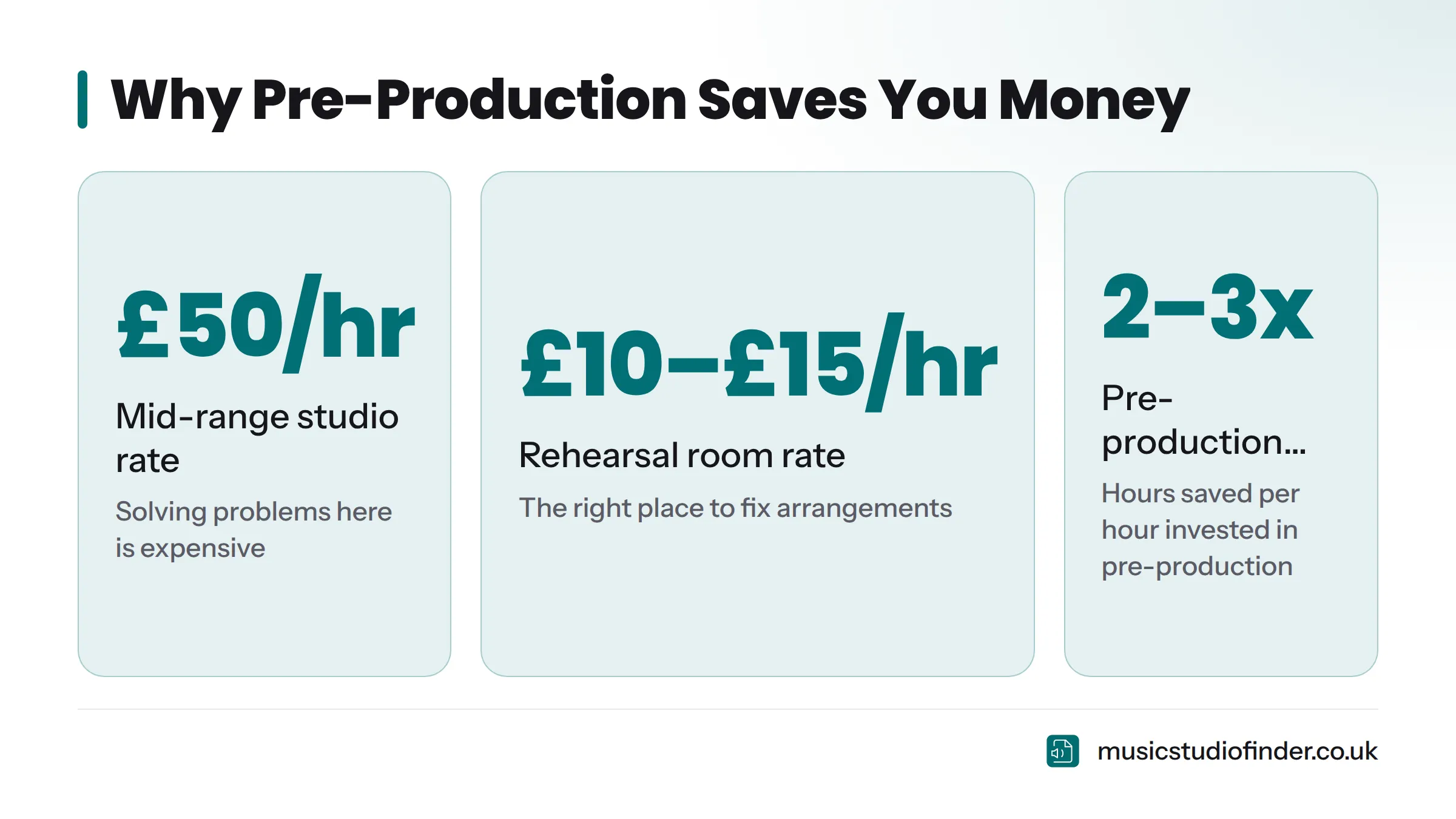
Rehearsal studios in the UK typically charge £8–£25 per hour for a room, or £40–£100 for a day session. That is the best money you will spend. Every hour you invest in pre-production saves roughly two to three hours of studio time, because you are solving problems in a cheaper room rather than an expensive one. Reading how to prepare for your first studio session before you book can make a measurable difference to your final bill.
Studio Tracking - Capturing Your Performance
Tracking is what most people mean when they say "recording." This is when you capture your live performance - vocals, guitar, drums, bass - in the studio's live room or vocal booth. The engineer sets up microphones, monitors levels, and runs the DAW (digital audio workstation) to capture your takes.
Studio time is charged by the hour or by the day, and it includes the room, the equipment, and usually the in-house engineer's time - though not always. Confirm what is included before you book.
Overdubs and Additional Takes
Once your core performance is tracked, overdubs layer in the extras: harmonies, lead guitar solos, percussion, keys, additional instrumentation. Depending on the complexity of your arrangement, overdubs typically add two to four hours to your session at the same studio rate.
Mixing - Balancing and Polishing the Track
Mixing takes all your recorded tracks and blends them into a single cohesive stereo file. A mixing engineer adjusts levels, applies EQ and compression, shapes the reverb and delay, and balances every element so the track sounds both professional and emotionally engaging. For a clear explanation of how these stages differ, the recording vs mixing vs mastering explained guide is worth reading before your session.
Mixing is almost always a separate cost from studio hire - whether you have it done at the same studio or outsource it to a specialist elsewhere.
Mastering - Making It Release-Ready
Mastering is the final step before distribution. A mastering engineer takes your mixed stereo file and optimises it for playback across different systems and streaming platforms, bringing it to the correct loudness level - typically -14 LUFS integrated for Spotify - and ensuring it translates well whether someone listens on earbuds, a car stereo, or a Bluetooth speaker. Stem mastering, where the engineer works with multiple grouped files rather than a single stereo mix, offers more control but costs more.
Distribution - Getting It to Listeners
Distribution puts your finished single on Spotify, Apple Music, Tidal, and other platforms. UK-based services like Ditto Music and international platforms like DistroKid handle this for an annual fee or per-release charge. The cost is modest, but most single recording budget guides forget to include it.
Promotion - Artwork, PR, and Social Content
A finished track sitting in a distributor's queue without promotion does nothing. Promotion costs include cover artwork, press photography, any press release or PR service, playlist pitching, and the time and money spent on social content. Budget for these from the start - they are what actually get the track heard.
Step 1 - Set Your Total Budget First
What It Realistically Costs to Record a Single in the UK in 2026
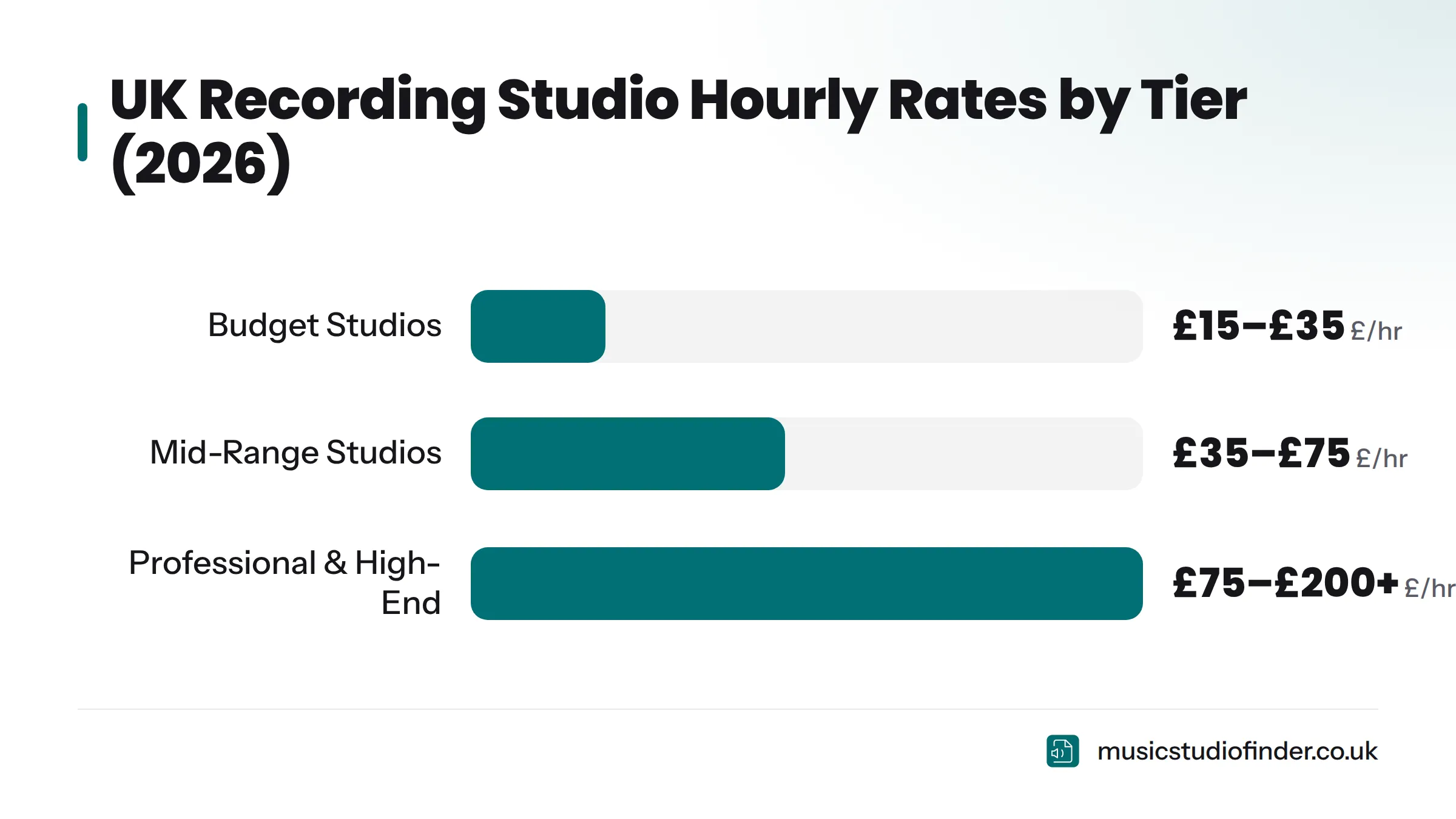
The recording studio costs UK artists face in 2026 range from £300 to £5,000+, with most independent artists spending somewhere in the £500–£2,000 range for a professionally presented release. Based on studio listing data across the Music Studio Finder platform, UK studio hourly rates currently range from £15 to £200+ depending on tier, city, and what is bundled in. The full cost - covering mixing, mastering, artwork, and distribution - determines your final figure. For a detailed look at how UK studio pricing is structured across different tiers, the recording studio cost UK guide is the clearest starting point.
Set a Hard Ceiling Before You Allocate Anything
Before you assign a single pound to any category, decide on your maximum. Write it down. This is your non-negotiable ceiling. If it is £800, every decision runs through that number. If you start allocating without a ceiling, you will unconsciously expand your scope to fill whatever is available - or, worse, spend your way into debt without noticing.
Be honest about what you can genuinely afford while still covering rent, food, and other basics.
Build in a 15–20% Contingency Buffer
Every professional budget in any field includes a contingency, and recording is no different. Reserve 15–20% of your total for unexpected costs: an extra studio hour because vocals took longer than planned, a second revision round on your mix, or a last-minute session musician booking. If you spend £1,000, hold £150–£200 back. If you never need it, that money rolls into promotion.
Rule of thumb: Studio recording costs - tracking and overdubs combined - should represent no more than 50–60% of your total single production budget. The remaining 40–50% covers mixing, mastering, release, and promotion. Many artists get this ratio badly wrong, spending 90% on the recording session and having nothing left for the stages that actually get the track heard.
Step 2 - Break Down Every Cost Category
Here is every cost category to account for in a recording a single budget, with realistic UK price ranges for 2026.
Studio Hire - Hourly vs Day Rate
Studio hire covers the physical recording space - the live room, vocal booth, control room, and equipment. This is separate from the engineer's time at many studios, though plenty of UK studios bundle both.
Hourly rates range from £15 (small home-converted studios) to £200+ (top London rooms). Day rates - typically covering 8–10 hours - usually represent a 20–30% saving over equivalent hourly bookings. For a single, most artists need between 4 and 10 hours of tracking time. The recording studio day rate vs hourly rate breakdown helps you decide which makes more sense for your session.
Before comparing prices, check what is included when you hire a recording studio - two quotes at the same rate can cover very different things.
Audio Engineer Fees
Some studios include their in-house engineer in the room rate. Others charge separately at £20–£60 per hour. Confirm this in writing when you enquire. If engineering is not included, add it as a separate line item in your indie artist recording budget.
The guide do recording studios include an audio engineer? explains exactly what to ask before you commit.
Music Producer Fees - Do You Need One?
A music producer shapes the creative direction of the track: they make arrangement decisions, guide your performance, suggest production ideas, and often handle programming or beat-making. An audio engineer captures what you play. A producer helps you figure out what to play and how to play it. The music producer vs recording engineer guide explains the distinction clearly.
Producer fees in the UK range from £150–£500 per day for emerging producers to £1,000–£5,000+ per project for established names. Some producers work on a points deal, taking a percentage of royalties rather than an upfront fee. For a first single on a tight music production budget, an experienced engineer who can offer production input is often a cost-effective alternative to hiring a dedicated producer.
Session Musician Costs
If you are a solo artist who needs a live drummer, bassist, or string arranger, you will need session musicians. The Musicians' Union (UK) publishes recommended minimum rates for session work. As of 2026, MU minimum session rates for studio recordings typically start at around £200 for a three-hour new media recording session, though rates vary by project type and negotiation.
Many session musicians will negotiate for independent artists, particularly on non-commercial or low-volume projects. Agree the fee, the number of takes, and ownership of the performance in writing before the session begins.
Pre-Production Rehearsal Costs
Budget £8–£25 per hour for a rehearsal studio room, or £40–£100 for a full day session. Three to four rehearsal sessions before you are studio-ready costs roughly £60–£200 - money that typically saves you three times that amount in recording studio costs. The recording studio vs rehearsal studio guide is worth reading if you are weighing how much time to spend in each environment.
Mixing Fees
Mixing a single costs £80–£400 with a freelance engineer, or £150–£600 if done at a professional studio. Online mixing services sit at the lower end of that range. Budget for one to two revision rounds - most mixers include one round in their fee, but additional rounds usually cost extra.
Mastering Fees
Single mastering costs £40–£150 with a dedicated mastering engineer. Automated online mastering tools like LANDR are available for much less - often included in a subscription - but the quality gap between automated and human mastering is audible on professional playback systems. Stem mastering typically costs £80–£200 per single and gives the engineer more to work with.
Cover Artwork and Design
A professionally designed single cover costs £50–£300 depending on the designer. Streaming platforms require a minimum 3000 x 3000 pixel image, and your artwork is the first visual impression of your release. If you have genuine design skills, a well-executed self-made cover is a viable option - but an amateur-looking cover undermines an otherwise professional release.
Distribution and Release Costs
Ditto Music charges from around £19 per year for unlimited releases - UK-based and widely used by independent artists. DistroKid charges from around $22.99 per year for unlimited uploads. CD Baby charges a one-time fee per single (typically around $9.95 for standard distribution). Whichever service you choose, factor in the cost and the timeline - distribution to major platforms takes two to seven working days on average.
Press, PR, and Promotional Budget
Paid PR for an independent single release costs £200–£2,000+ depending on the service level. Playlist pitching services like Groover and SubmitHub charge per submission, typically £1–£3 per curator. A modest promotional budget of £100–£300 for a first single is realistic and worthwhile - covering targeted social promotion, a few playlist pitching campaigns, and basic press outreach.
Here is a full summary across all cost categories:
| Cost Category | DIY Option | Professional Cost (Low) | Professional Cost (High) | Notes |
|---|---|---|---|---|
| Pre-production rehearsals | Home practice | £40 | £200 | Per block of sessions |
| Studio hire (tracking) | Home recording | £60 | £800 | 4–10 hours at studio rates |
| Audio engineer | Self-engineer | £80 | £400 | Often included in studio rate |
| Music producer | Skip or self-produce | £150 | £1,500 | Optional but high impact |
| Session musicians | MIDI/virtual instruments | £200 | £600 | Per musician, per session |
| Mixing | Self-mix in DAW | £80 | £600 | Per single |
| Mastering | Automated (LANDR) | £40 | £200 | Per single |
| Cover artwork | Self-design in Canva | £50 | £300 | Minimum 3000×3000px |
| Distribution | Free tier (Amuse) | £19/yr | £30/yr | Annual subscription or per release |
| PR and promotion | Organic social only | £50 | £500 | Playlist pitching, paid social |
UK Studio Rates in 2026 - What to Expect
Budget Studios - £15–£35/hr
Budget studios are often home conversions, small independent rooms, or project studios run by a single engineer-producer. At this price point, you get a competent acoustic space, a basic microphone selection, and in-house engineering. The equipment may not include an SSL console or a grand piano, but for a well-rehearsed singer-songwriter or a simple two-piece band, the results can be genuinely strong.
These rooms suit demos, spoken word, podcasts, and simple tracking sessions. For a single with a stripped-back arrangement - voice, guitar, minimal production - a budget studio is a legitimate choice.
Mid-Range Studios - £35–£75/hr
Mid-range studios offer a meaningful step up in acoustic treatment, microphone quality, and outboard gear. You will often find a wider selection of vintage and boutique microphones, analogue compression, and a more experienced in-house engineer. These studios handle full band recordings, vocal production sessions, and more complex arrangements with ease.
Most independent artists releasing singles in the UK work at this tier. Based on listings on the Music Studio Finder platform, mid-range studios in cities like Manchester, Bristol, Birmingham, and Leeds cluster in the £40–£65 per hour range, with London studios typically starting higher. This tier offers the best balance between studio time cost UK artists pay and the quality of the result.
Professional and High-End Studios - £75–£200+/hr
High-end studios offer the best acoustic design, top-tier signal chains, vintage analogue consoles (SSL, Neve, API), and experienced senior engineers. These rooms deliver the quality ceiling needed for major-label-level releases. Day rates at this tier can reach £800–£2,000.
For most independent artists releasing a first or second single, this tier is not necessary. The law of diminishing returns applies quickly when the song, performance, and arrangement are not equally polished.
Day Rates vs Hourly Rates - Which Saves You Money?
For a single requiring more than four hours of studio time, a day rate almost always saves money. Most UK studios offer day rates at 20–30% below the equivalent hourly total. The recording studio prices UK guide covers this with current benchmarks.
If you only need two to three hours - a well-rehearsed solo vocal session, for example - hourly booking is more cost-effective. Do not pay for a full day when you only need a morning.
How Many Studio Hours Do I Need?
| Artist Type | Likely Hours Needed | Estimated Studio Cost (mid-range) |
|---|---|---|
| Solo singer-songwriter (well-rehearsed) | 3–5 hours | £120–£325 |
| Solo artist with full production/overdubs | 6–8 hours | £240–£520 |
| Full band (tight, rehearsed) | 6–10 hours | £240–£650 |
| Full band (complex arrangement, live room) | 10–16 hours | £400–£1,040 |
These figures assume you arrive genuinely studio-ready. Under-rehearsed performers should add 30–50% to any estimate. For more detailed guidance, how many hours to book in a recording studio breaks it down by scenario.
Three Worked Budget Examples
Micro Budget Single - Under £500
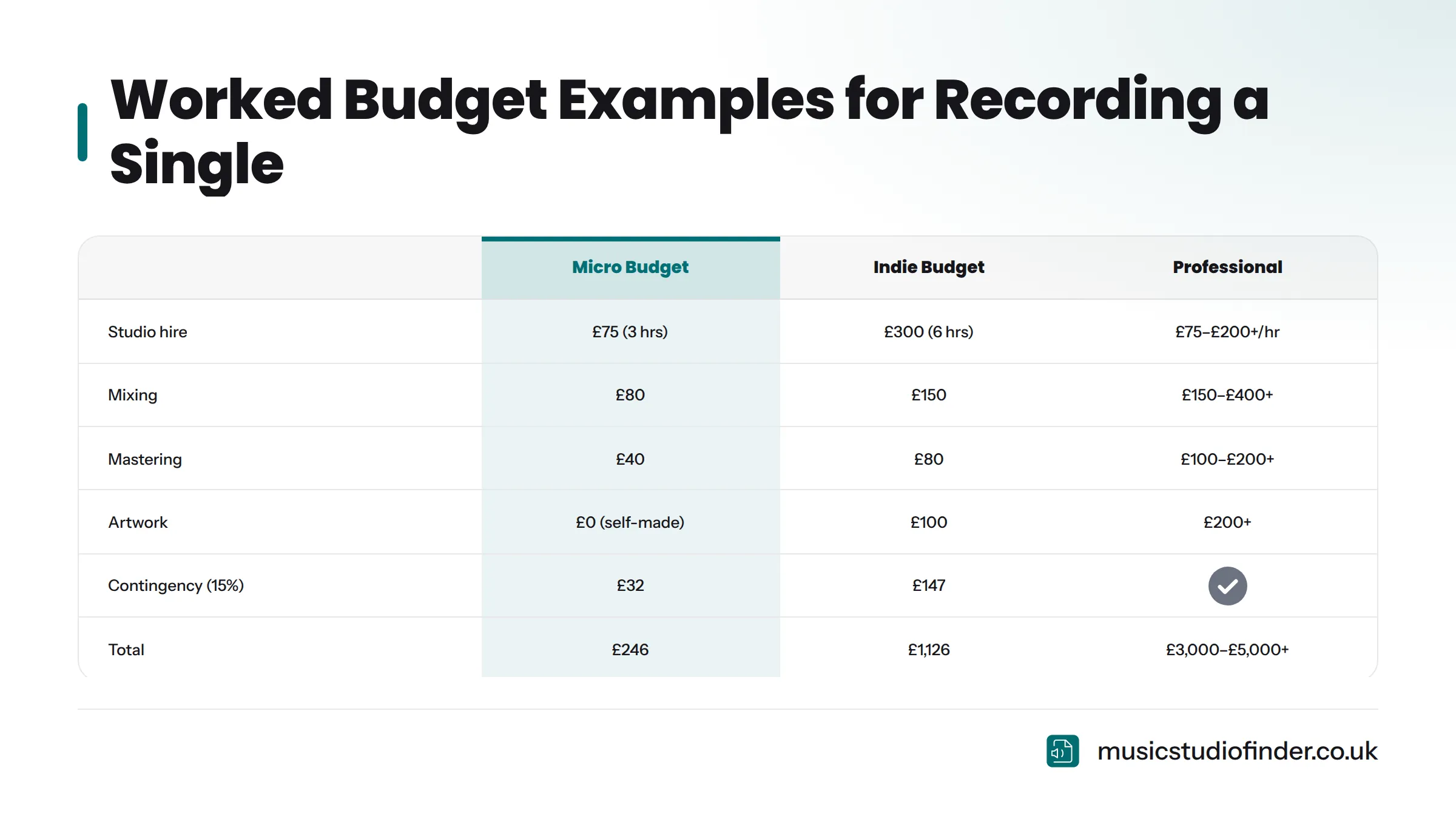
This scenario works for a solo artist who is confident recording, can self-produce or work with a producer friend, and is focused on a decent-quality release without a large spend. It assumes home recording for basic tracking and outsourced mixing and mastering.
| Cost Item | Budget Allocated |
|---|---|
| Pre-production (home practice, free) | £0 |
| Studio hire - 3 hours at a budget studio | £75 |
| Audio engineer (included in rate) | £0 |
| Producer | £0 (self-produced) |
| Session musicians | £0 (MIDI/programmed) |
| Mixing (online freelancer) | £80 |
| Mastering (online mastering) | £40 |
| Cover artwork (self-designed) | £0 |
| Distribution (Ditto annual plan) | £19 |
| Promotion (organic social only) | £0 |
| Contingency (15%) | £32 |
| Total | £246 |
At this level, quality depends heavily on your own preparation and skills. It is a real, workable option for bedroom pop, lo-fi, folk, and spoken word artists who know their DAW.
Indie Budget Single - £500–£2,000
This is the most common music release budget for independent UK artists in 2026. It assumes a mid-range studio, a professional mix, human mastering, and a modest artwork and promotion budget.
| Cost Item | Budget Allocated |
|---|---|
| Pre-production - 2 rehearsal sessions | £80 |
| Studio hire - 6 hours at £50/hr | £300 |
| Audio engineer (included in rate) | £0 |
| Producer (emerging, half-day) | £150 |
| Session drummer (one session) | £0 (programmed) |
| Mixing (freelance engineer) | £150 |
| Mastering (dedicated engineer) | £80 |
| Cover artwork (freelance designer) | £100 |
| Distribution (Ditto annual) | £19 |
| Promotion (playlist pitching + social) | £100 |
| Contingency (15%) | £147 |
| Total | £1,126 |
This affordable recording budget UK artists can realistically manage produces a commercially competitive single when the song and performance are strong. The investment in professional mixing alone tends to deliver a noticeable quality return.
Professional Budget Single - £2,000–£5,000
This tier suits artists preparing for a label pitch, a PR campaign, or a release they intend to push hard. Every element is handled by a professional.
| Cost Item | Budget Allocated |
|---|---|
| Pre-production - rehearsal studio block | £150 |
| Studio hire - 2 days at a high-mid room (£600/day) | £1,200 |
| Audio engineer (senior, included in rate) | £0 |
| Producer (established, project fee) | £600 |
| Session musician (e.g., session drummer) | £250 |
| Mixing (professional mixing engineer) | £300 |
| Mastering (stem mastering) | £150 |
| Cover artwork (professional photographer + designer) | £300 |
| Distribution | £19 |
| PR campaign (independent PR service, 4 weeks) | £400 |
| Contingency (15%) | £497 |
| Total | £3,866 |
At this level, the result should be indistinguishable in quality from a label-funded release - provided the song and performance match the production investment.
What to DIY and What to Pay a Professional For
When Home Recording Is Good Enough
Home recording has improved dramatically. A decent USB microphone, a treated room, and a capable DAW like Logic Pro or Ableton Live can capture a compelling vocal or acoustic guitar performance at zero studio hire cost. For lo-fi, bedroom pop, acoustic, and electronic music where you program rather than track live instruments, home recording is a genuine and legitimate choice. The recording studio vs home studio guide covers both sides honestly.
Home recording works well for:
- Demo creation and pre-production
- Electronic production and programming
- Spoken word and podcast-style vocals
- Artists who already have basic acoustic treatment in their space
Why Professional Mixing and Mastering Is Almost Always Worth It
This is the one area where the DIY argument tends to collapse. Mixing and mastering require trained ears, calibrated listening environments, and years of reference experience. An amateur mix on a professional recording wastes the studio time you paid for. A professional mix on an average recording often sounds dramatically better than an amateur mix on a great one.
Online mastering tools like LANDR can produce acceptable results for demos or very simple tracks. But a human mastering engineer makes decisions an algorithm cannot: they listen to the emotional arc of the track, adjust for genre loudness conventions, and ensure the record translates across systems they have spent years learning to trust.
The £80–£200 you spend on professional mixing and mastering is often the highest-return investment in your entire single recording budget.
Evaluating Your Own Skills Honestly
Here is a practical decision framework for each production stage:
| Stage | DIY if... | Hire a Pro if... |
|---|---|---|
| Pre-production | You know your song inside out | You need arrangement help |
| Tracking (recording) | You have a treated room + good mic | You play live drums or need a premium vocal chain |
| Programming/MIDI | You know your DAW well | You want live musicians |
| Mixing | You have 2+ years of mixing experience | You want a commercially competitive sound |
| Mastering | The track is a demo or low-stakes release | It is going on streaming platforms and being promoted |
| Artwork | You have genuine design skill | Your genre has strong visual expectations |
| Distribution | Always set this up yourself - it is simple | - |
| PR | Early career, organic only | You have a budget and a release worth promoting |
How Pre-Production Cuts Your Studio Bill
Here is the maths. A mid-range UK recording studio charges around £50 per hour. A rehearsal studio room costs around £10–£15 per hour. If you spend two extra hours in the recording studio working through an arrangement you could have sorted in a rehearsal room, you have spent £100 on a problem that cost £20 to solve. Pre-production is not optional when you are paying for professional studio time - it is financial common sense.
What to Have Ready Before Your Session
Before you book your first hour of studio time, have the following in place:
- A final, locked arrangement - no "we might change the bridge" conversations once you are in the room
- A home demo (even a phone recording) that the engineer can reference
- Every part memorised and performable at a consistent standard at the session tempo
- A clear BPM for the track (use a click track in your rehearsals)
- Reference tracks to share with the engineer for sound direction
- A list of overdubs you plan to add after the main tracking is done
Demoing at Home vs Booking a Rehearsal Studio
Home demos capture arrangements and ideas at no cost. Rehearsal studios with full band or full backline build performance tightness, spatial awareness, and stamina. Both serve different purposes. For a solo artist, home demoing may be all you need. For a band recording together live in a room, dedicated rehearsal studio time is worth the investment.
How to Negotiate with Recording Studios
Off-Peak Rates and Block Booking Discounts
Most studios have off-peak windows - weekday mornings, Sunday evenings, or gaps between major client sessions - where they will negotiate on price. A studio with an empty room earns nothing; a discounted booking is better than no booking. Ask directly: "Do you have any off-peak availability?" or "Is there a discount for booking multiple days at once?"
Block booking - paying for three or more sessions in advance - often unlocks discounts of 10–20%. If you know you need 12 hours of studio time, book it as a block rather than three separate sessions. The what to look for when booking a recording studio guide includes practical questions to ask before you commit.
Bundling Recording and Mixing - When It Makes Sense
Some studios offer packages that include tracking, mixing, and sometimes mastering at a bundled price. These are worth considering when:
- You want a single point of contact and a consistent sound throughout
- The studio has a strong mixing track record (listen to previous work before agreeing)
- The bundled price represents a genuine saving over hiring each service separately
They are not worth it if the studio's mixing engineer is weaker than a specialist you could hire elsewhere. Always listen to mixing samples before accepting a bundle.
What to Put in Writing Before You Book
Before you pay a deposit, get written confirmation - email is fine - covering:
- The exact number of hours booked and the total cost
- Whether engineer time is included or charged separately
- The revision policy for mixing, including how many rounds are included
- File delivery format and any additional charge for session file export
- Cancellation and deposit refund policy
The are recording studio deposits refundable? guide covers what to expect and what to ask before you sign anything.
Hidden Costs That Catch Artists Off Guard
Studio Parking and Travel
London studios in particular sit in areas with expensive or scarce parking. A full day at a studio in Hackney or Bermondsey with gear can cost £20–£40 in parking alone, or a taxi to transport your equipment. Factor in travel costs honestly - especially for a full band session where everyone is arriving separately.
Session File Export and Hard Drive Fees
Some studios charge for exporting your session files at the end of your booking - typically £10–£30 for the drive itself, and occasionally a fee for the engineer's time to organise the stems. Always ask: "Will I receive all my raw session files, and is there a cost for that?" If you plan to have your mixing done elsewhere, those files are not optional.
Revision Rounds for Mixing and Mastering
Most engineers include one round of revisions in their fee. A second or third round often costs £30–£80 per round. The best way to avoid revision fees is to give clear, specific feedback the first time - reference specific moments in the track, describe what you want to change in sonic terms, and provide reference tracks.
Songwriter Registration and PRS/MCPS Costs
Registering your song with PRS for Music and MCPS ensures you collect royalties when your single is played on radio, streamed, or performed live. PRS membership for songwriters is free. MCPS membership (for recording royalties on physical or digital releases) is also free for songwriters. There is no cost to join - but you do need to register each song and release to collect what you are owed.
PPL handles neighbouring rights for performers and record labels - also free to join, and worth doing if you perform on your own recordings.
Before you sign anything with a studio or producer, get a full written quote covering engineer time, revision limits, file delivery format, and any additional fees. Verbal agreements in the music industry carry little weight once the session is over.
For a fuller list of what to watch for, the recording studio hidden fees guide is essential reading before you book.
Budget Tracking - How to Stay on Course
A Simple Spreadsheet That Actually Works
You do not need specialist software. A basic spreadsheet with four columns - Cost Category, Budgeted Amount, Actual Amount Spent, Difference - gives you complete visibility. Update it every time you pay for something related to the project.
Here is a printable budget tracker you can copy directly:
| Cost Category | Budgeted (£) | Actual (£) | Difference (£) |
|---|---|---|---|
| Pre-production rehearsals | |||
| Studio hire | |||
| Audio engineer | |||
| Music producer | |||
| Session musicians | |||
| Mixing | |||
| Mastering | |||
| Cover artwork | |||
| Distribution | |||
| Promotion / PR | |||
| Miscellaneous / contingency | |||
| TOTAL |
Review the tracker after every payment. If you are running over in one category, decide consciously whether to cut elsewhere or accept the overrun. Never let costs drift silently.
When to Call a Stop - and When to Invest More
Spending more than planned is justified in two scenarios: when the track has genuine commercial potential and the extra cost directly improves that potential (a second mix revision that fixes a specific problem), and when the quality gap without the additional spend is audible to a professional listener.
Spending more is not justified when you are chasing perfection out of anxiety, when the extra cost goes to a stage already at a professional standard, or when the money would serve the release better spent on promotion than production.
Finding the Right Studio for Your Budget
Compare Studios on Value, Not Just Price
Price per hour is the least useful metric for comparing recording studios. What matters is what you get for that hour - the acoustic quality, the engineer's experience, the microphone selection, the monitoring environment, and the working relationship. Two studios at £50/hr can produce dramatically different results.
When comparing options, listen to recordings made at each studio (ask for examples), read reviews from artists in similar genres, and check whether the engineer has experience with your style of music. A metal-specialist studio might charge less per hour but produce a weaker result for a piano-led ballad.
The how to find an affordable recording studio guide covers how to assess value across these dimensions. The choose the best recording studio near you guide walks through the comparison process step by step.
Reading Studio Listings and Ratings
On Music Studio Finder, every studio listing shows its hourly and day rates, the gear available, what is included in the booking price, and verified reviews from artists who have recorded there. Use listings to shortlist studios, then contact two or three directly to ask about availability, packages, and whether they have experience with your genre.
Booking with Confidence
Once you have chosen a studio, confirm everything in writing, pay the deposit only when you are satisfied with the terms, and confirm your session time 48 hours in advance. Arrive on time - late arrivals cut into your own paid time. Bring everything on your pre-session checklist, and know your parts well enough to perform them under pressure.
Music Studio Finder lists hundreds of UK recording studios across every price tier and region. Search studios near you to compare options and find the right match for your music release budget and genre.
Frequently Asked Questions
Recording a single in the UK in 2026 costs between £300 and £5,000 depending on studio quality, location, and services included. Most independent artists spend £500–£2,000 for a professionally presented release, covering studio hire, an audio engineer, mixing, mastering, cover artwork, and distribution. High-end productions with a producer, session musicians, and a PR campaign reach £3,000–£5,000 or more.
A well-rehearsed solo artist typically needs 3–5 hours. A solo artist with overdubs and additional production needs 6–8 hours. A full band recording live needs 6–10 hours, and a full band with a complex arrangement may need 10–16 hours. These figures assume you arrive prepared. Under-rehearsed performers should add 30–50% to any estimate.
It depends on how developed your creative vision is. An experienced audio engineer often provides light production input as part of their role. If you know exactly what sound you want and your arrangement is locked, a skilled engineer without a separate producer is enough. If you need help shaping the track's direction, sound palette, or emotional arc, a producer adds genuine value. You do not always need both.
Yes - with caveats. A solo artist who is well-rehearsed, uses a budget studio, self-produces, and hires a freelance mixer for £80–£100 can produce a commercially presentable single for under £500. The key is thorough preparation and honest self-assessment of your recording and production skills. A full band or complex production at this budget is significantly harder to execute at a professional standard.
Mixing takes all your individual recorded tracks and blends them into a balanced stereo file. Mastering takes that final stereo file and optimises it for distribution, ensuring consistent loudness - typically -14 LUFS for streaming - and sonic translation across different playback systems. Both are necessary for any track going onto streaming platforms. Skipping mastering results in a track that sounds quieter and less polished than the professionally mastered releases sitting next to it on a playlist.
Home recording works well for solo artists with electronic production, acoustic genres, and artists who already have basic acoustic treatment in their space. A professional recording studio gives you better acoustics, better microphones, and an experienced engineer - which makes the biggest difference when recording live instruments, full bands, or professional-level vocals. For most independent artists releasing a first single, a mid-range professional studio at £35–£75/hr produces better results than a home setup.
Arrive fully rehearsed, with a locked arrangement, a clear BPM, and reference tracks ready. Use a budget tracker spreadsheet and update it after every payment. Book a day rate if you need more than four hours. Build a 15–20% contingency into your total before you allocate anything. Get everything in writing before the session, including revision limits and file delivery terms.
After recording, budget for mixing (£80–£600), mastering (£40–£200), cover artwork (£50–£300), distribution (£19–£30/yr or per release), and promotion (£50–£500+). Many artists underestimate post-production and release costs. A practical rule: plan for at least 40% of your total budget to cover everything after the tracking session ends.
In most genres, a well-programmed MIDI drum part through a quality sample library is indistinguishable from a live performance on a typical streaming playback system. For jazz, classical, soul, or any genre where live feel is central to the track's identity, a session musician adds something software cannot replicate. For pop, electronic, hip-hop, or indie rock where the track is primarily produced, MIDI is a legitimate and cost-effective choice.
Search on Music Studio Finder to filter UK studios by location, price, and genre specialisation. Compare listings on their hourly rate, included services, and verified reviews. Contact studios directly to ask about off-peak rates, block booking discounts, and package deals. Read what to look for when booking a recording studio before you commit to any booking.
Sources
- Musicians' Union UK - Session musician rates and guidance
- PRS for Music - Songwriter and publisher registration
- PPL - Neighbouring rights registration for performers and labels
- Association of Independent Music (AIM)
- DistroKid - Music distribution pricing
- Ditto Music - UK music distribution pricing
- Spotify for Artists - Loudness and delivery specifications
- Logic Pro - Apple UK
- Ableton Live - Music production software
- LANDR - Online mastering and music services