
Audio engineer rates UK vary more than most musicians expect. In 2026, UK audio engineers charge between £30 and £75 per hour depending on their specialism and experience. Freelance recording and mixing engineers most commonly work on day rates of £150–£400, while mastering engineers usually charge per project, ranging from £50 to £200 per song. Live sound engineers hired for events in London average around £230 per booking, though rates across the rest of the UK sit lower - typically £120–£250.
Whether you are a musician budgeting your next session or a freelance engineer working out what to charge, this guide covers every specialism, every pricing model, and every region in the UK, all anchored to 2026 market rates.
Audio Engineer Rates at a Glance (UK, 2026)
Here is a quick-reference overview of what different types of audio engineers charge across the UK in 2026. These are typical market ranges drawn from current industry data, real listings, and guidance from bodies such as BECTU - the Broadcasting, Entertainment, Communications and Theatre Union. Rates vary by experience, location, and project complexity - treat these figures as working benchmarks, not fixed prices.
| Engineer Type | Typical Hourly Rate | Typical Day Rate | Typical Project Fee |
|---|---|---|---|
| Recording engineer | £30–£65 | £150–£350 | £100–£500 (per session) |
| Mixing engineer | £35–£75 | £175–£400 | £50–£250 (per song) |
| Mastering engineer | £40–£80 | £200–£450 | £50–£200 (per song) |
| Live / PA engineer | £25–£60 | £120–£300 | £120–£400 (per event) |
| Broadcast / post-production engineer | £40–£90 | £200–£500 | Varies by project |
| Podcast / voice-over engineer | £25–£55 | £120–£250 | £30–£150 (per episode) |
Note: These are 2026 UK market averages. London rates sit toward the upper end or above these ranges. Entry-level engineers typically charge below the lower figure; established professionals and award-winners charge above the upper figure.
Types of Audio Engineers and What They Charge
The term "audio engineer" covers a wide range of specialisms. Each role carries different skills, different equipment demands, and different pricing norms. Let's break them down.
Recording Engineer Rates UK
A recording engineer captures performances in the studio - setting up microphones, managing signal routing through a mixing desk or digital audio workstation (DAW), and ensuring the best possible take makes it to the session files. They typically work inside a studio environment using tools like Pro Tools, Logic Pro, or Reaper alongside an audio interface and studio monitors.
In 2026, recording engineers in the UK charge:
- Hourly rate: £30–£65
- Day rate: £150–£350
- Per session (half-day or full-day flat fee): £100–£500 depending on studio and project complexity
Many recording studios include a house engineer in their room hire rate, so it is worth asking whether the studio you are booking provides an engineer before budgeting separately.
Mixing Engineer Rates UK
A mixing engineer takes recorded tracks and balances them into a finished stereo mix. Modern mixing is predominantly "in-the-box" - meaning the engineer works entirely within a DAW using plugin suites from developers like Waves, iZotope, or FabFilter - though some engineers still work on analogue or hybrid consoles.
Mixing engineers in the UK typically charge per song rather than per hour, making project fees the dominant pricing model here:
- Hourly rate: £35–£75
- Day rate: £175–£400
- Per song (stem mix): £50–£250, rising to £300–£600+ for top-tier engineers with industry credits
Stem count matters. A mix with 10 stems is a very different job from one with 48 or more. Engineers often tier their per-song rates based on stem count, so expect a quote to ask how many tracks you are bringing.
Mastering Engineer Rates UK
Mastering is the final stage of audio post-production: a mastering engineer takes a finished mix and optimises it for release across streaming platforms, vinyl, CD, and broadcast. The Music Producers Guild recognises mastering as a distinct and specialist discipline requiring dedicated listening rooms and high-end monitoring systems.
UK mastering engineer rates in 2026:
- Hourly rate: £40–£80
- Day rate: £200–£450
- Per song: £50–£200
- Per album (10–12 tracks): £300–£1,200 depending on experience and whether the engineer uses an analogue mastering chain or pure digital
Online mastering through platforms like SoundBetter or AirGigs can bring costs below £50 per song, but you trade direct collaboration for speed and price.
Live Sound / PA Engineer Rates UK
A live sound engineer operates a PA system at concerts, festivals, corporate events, weddings, and theatre productions. The role typically splits into front-of-house (FOH) engineering - managing what the audience hears - and monitor engineering (also called foldback), which manages what the performers hear on stage.
UK live sound engineer rates in 2026:
- Hourly rate: £25–£60
- Day rate: £120–£300 (excluding travel and per diems)
- Per event (London average): approximately £230, with a range of £120–£400+
- Per diems: many engineers working away from home add a daily allowance of £30–£50 on top of the day rate to cover meals
Travel costs are almost always charged separately. For UK-wide touring, engineers working with signed or established acts can earn £200–£500+ per day on a full touring package.
Broadcast and Post-Production Engineer Rates UK
Broadcast engineers work in television, radio, film, and online video production. This is where BECTU rate cards carry the most direct weight, as much of the broadcast sector operates under union-negotiated minimums.
UK broadcast and post-production audio engineer rates in 2026:
- Hourly rate: £40–£90
- Day rate: £200–£500 (BECTU-negotiated minimums for broadcast work typically sit between £180 and £350 per day depending on the production type)
- Post-production project fees: vary widely, from £300 for a short-form edit to several thousand pounds for a long-form documentary or drama
The Association of Professional Recording Services (APRS) provides further guidance on professional rates in the recording and post-production sector.
Podcast and Voice-Over Engineer Rates UK
Podcast engineering has grown into a distinct sub-discipline. A podcast engineer typically handles recording, editing, noise reduction, levelling, and export for distribution platforms. Voice-over engineers work similarly but output to broadcast, advertising, or audiobook formats.
UK podcast and voice-over engineer rates in 2026:
- Hourly rate: £25–£55
- Day rate: £120–£250
- Per episode (editing and mastering): £30–£150 depending on episode length and complexity
This is one of the most accessible entry points for emerging engineers, and rates at the lower end often reflect that.
Pricing Models Explained: Hourly, Day Rate, or Per Project?
Understanding how audio engineers price their work is just as important as knowing the numbers. The right pricing model depends on the type of project and what gives both sides the most clarity.
Hourly Rate - When It Makes Sense
Hourly billing works well for open-ended or unpredictable sessions - a band still refining arrangements, a voice-over talent prone to multiple takes, or a live rehearsal with an unclear finish time. It protects the engineer against scope creep and gives clients flexibility if the session runs short.
The downside: costs can escalate if a session overruns. Clients who book on an hourly basis should read this guide on how many hours to book in a recording studio to plan more accurately.
Day Rate - The Standard for Session and Live Work
A day rate (typically covering 8–10 hours) is the standard pricing model for recording sessions, live events, and touring work. It gives both the engineer and the client a predictable cost and encourages everyone to work at a steady pace.
A sound engineer's day rate is the total fee charged for one full working day on a project. It usually covers the engineer's time and expertise, but not travel, accommodation, or per diems - those are negotiated separately. In 2026, day rates for UK audio engineers range from £120 (entry-level live engineer outside London) to £500+ (established broadcast or top-tier mixing engineer).
Per-Project / Per-Song Fees - When a Flat Rate Works Best
Mixing and mastering engineers almost universally prefer per-project or per-song fees. The client knows the total cost upfront; the engineer can work at their own pace without watching the clock. For a musician recording a single or EP, per-song fees offer the clearest budgeting.
A flat-rate project fee for mixing might be £80 per song for an emerging engineer, or £200–£300 per song for a mid-level professional. For mastering, £60–£150 per song is a reasonable mid-market range in the UK.
Retainer and Package Deals
Some engineers - particularly those working with an artist or label on a longer-term basis - agree a monthly retainer or a bundled package (for example, mixing and mastering for an entire album at a reduced per-song rate). Package deals typically offer a 10–20% saving over individual track pricing. If you are recording a full album, ask about package pricing upfront.
Which pricing model suits your project?
- Recording a live band session - Day rate
- Mixing a single or EP - Per-song fee
- Mastering an album - Per-project package
- Hiring a live PA engineer for a gig - Day rate + travel
- Podcast editing on an ongoing basis - Per-episode or monthly retainer
- Voice-over session with unknown duration - Hourly rate
How Experience Level Affects Audio Engineer Rates in the UK
A newly graduated engineer and one with 15 years of UK music industry credits occupy completely different price brackets. Here is how career stage maps to realistic 2026 freelance rates.
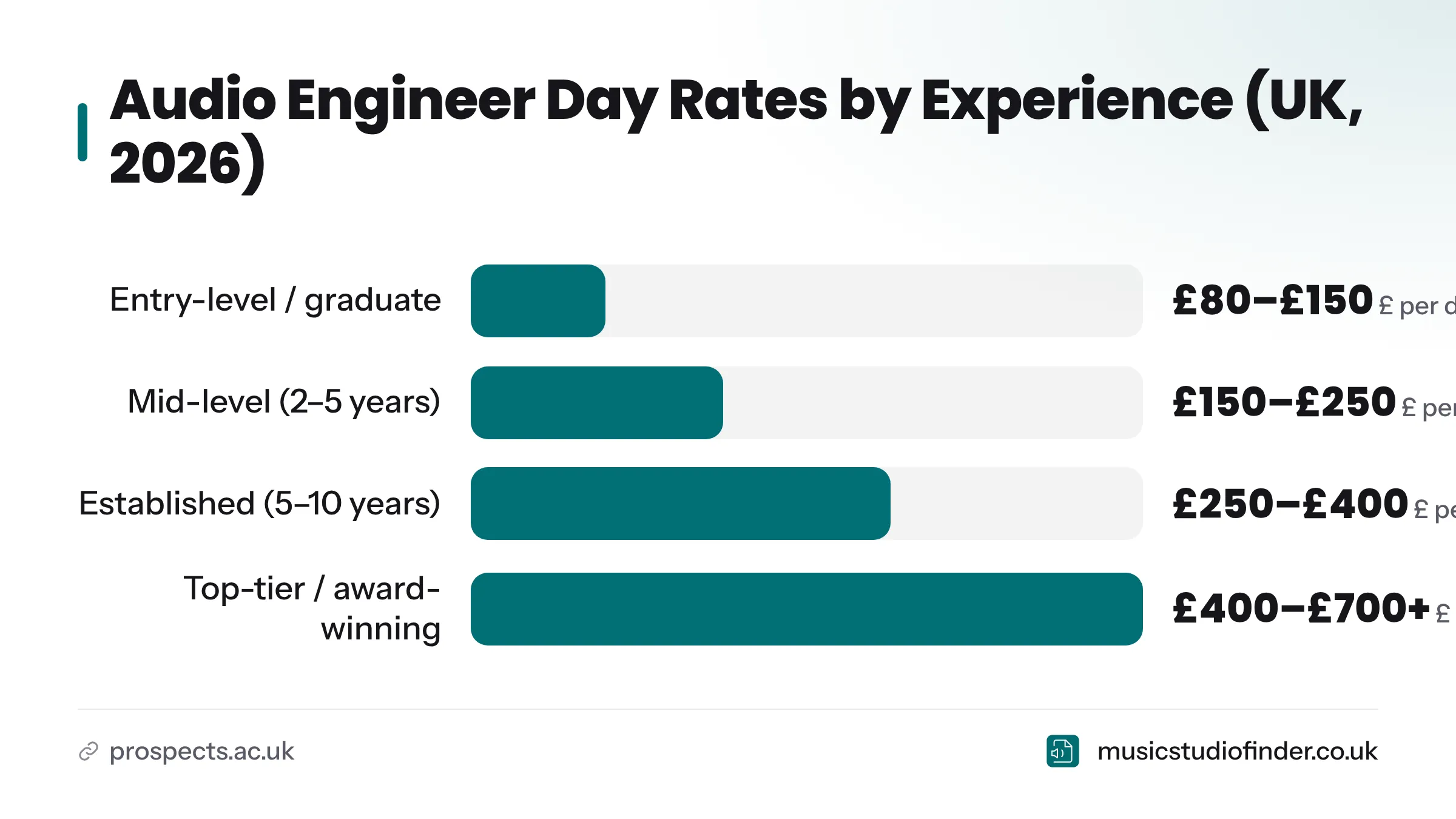
| Experience Tier | Typical Day Rate | Typical Per-Song Fee | What You Get |
|---|---|---|---|
| Entry-level / recent graduate | £80–£150 | £30–£60 | Good technical foundation, limited credits, may require guidance |
| Mid-level (2–5 years) | £150–£250 | £60–£120 | Solid workflow, genre experience, reliable results |
| Established (5–10 years) | £250–£400 | £120–£200 | Strong portfolio, artist credits, faster turnaround |
| Top-tier / award-winning | £400–£700+ | £200–£500+ | Major-label credits, specialist gear, proven commercial track record |
Entry-Level and Recent Graduates
Engineers fresh from a music technology degree or vocational training typically charge £80–£150 per day and £30–£60 per song. Their technical skills are often solid, but their portfolio is limited, and they may still be building genre fluency. For artists on tight budgets, working with an emerging engineer can represent excellent value - provided you check their work carefully before committing. Prospects.ac.uk notes that starting salaries for employed sound engineers sit around £18,000–£25,000 per year, which translates roughly to £90–£125 per day at a standard rate.
Mid-Level Engineers (2–5 Years Experience)
Mid-level engineers have refined their workflow, built genre experience, and can typically point to a credible portfolio of released work. Day rates of £150–£250 and per-song mixing fees of £60–£120 reflect this stage. For most independent artists and small labels, mid-level engineers represent the sweet spot of quality and cost.
Established Professionals (5–10 Years)
At this tier, engineers carry a reputation, work faster, and often own their studio setup or have preferred rooms they book regularly. Day rates of £250–£400 and per-song fees of £120–£200 are common. These engineers are more likely to have handled full album projects, toured with artists, or worked across broadcast and commercial music simultaneously.
Top-Tier and Award-Winning Engineers
Engineers with Mercury Prize, BRIT Award, or Grammy credits - or those whose work appears on major-label releases - command £400–£700+ per day and £200–£500+ per song. Some charge well above these figures. At this level, rate negotiation is typically handled by a manager or agent, and project fees are customised per brief.
Audio Engineer Rates by UK Region
London dominates industry conversations, but the UK has active music scenes from Glasgow to Bristol, Belfast to Leeds - and rates reflect local market conditions. Here is a regional breakdown based on current market knowledge.
| Region | Typical Day Rate Range | Notes |
|---|---|---|
| London | £200–£500 | Highest overheads; most competitive market |
| Manchester / North West | £150–£300 | Strong scene; rates approaching London for established engineers |
| Birmingham / Midlands | £130–£280 | Growing industry base; competitive mid-market |
| Glasgow / Edinburgh / Scotland | £120–£260 | Healthy independent music scene; lower cost of living reflected |
| Cardiff / Wales | £110–£230 | Smaller market; Welsh Government arts funding can support studio costs |
| Belfast / Northern Ireland | £110–£230 | Active local scene; some of the most competitive rates in the UK |
| Leeds / Yorkshire | £130–£270 | Strong live and recording market |
| Bristol / South West | £140–£290 | Active independent sector; rates closer to London than the North |
| Smaller cities and rural areas | £80–£180 | Rates vary widely; local demand is the main driver |
London Audio Engineer Rates
London audio engineers charge a premium that reflects the city's cost of living, studio overheads, and the concentration of commercial work. For live sound engineers, the average booking cost in London sits around £230, with the market ranging from £120 for smaller events to £400+ for large corporate bookings. Studio-based mixing and mastering engineers in London often charge £200–£400 per day and £100–£250+ per song.
Manchester and the North West
Manchester's music industry has expanded significantly over the past decade, and engineer rates have followed. Day rates of £150–£300 are common for mid-to-established professionals. The city has a strong live music infrastructure, and FOH engineers working the city's venue circuit typically earn £150–£250 per show for mid-size events.
Birmingham and the Midlands
Birmingham's recording scene is competitive and growing. Recording and mixing engineers typically charge £130–£280 per day. The Midlands market is particularly active for urban, grime, and R&B production, and engineers with genre credibility in those areas can command the upper end of the range.
Glasgow, Edinburgh, and Scotland
Scotland's independent music scene supports a healthy community of freelance engineers. Engineers at studios like The Audio Lounge in Glasgow and operations like Mark Morrow Audio in Edinburgh reflect rates that are genuinely competitive without London pricing. Day rates typically run £120–£260.
Cardiff and Wales
Cardiff's scene is smaller but active, particularly around Welsh-language music and the broader indie and folk sectors. Day rates of £110–£230 reflect both market size and lower studio overheads. Arts Council Wales funding occasionally helps artists offset engineer costs - worth checking if you are based in Wales.
Belfast and Northern Ireland
Belfast has a creative and tightly networked music community. Engineer day rates of £110–£230 are common, and studios like JSR Audio in Belfast represent the kind of professional recording environments where these rates are most relevant.
Smaller Cities, Towns, and Rural Areas
Outside major urban centres, engineer rates drop to reflect lower demand and reduced cost of living. Rates of £80–£180 per day are typical in smaller markets. This can be excellent value for artists who do not need a London address on their credits.
Online vs. In-Person Audio Engineering: Does It Affect the Price?
Remote working in music production has changed the pricing picture meaningfully. Here is how the two models compare.
Remote Mixing and Mastering Rates
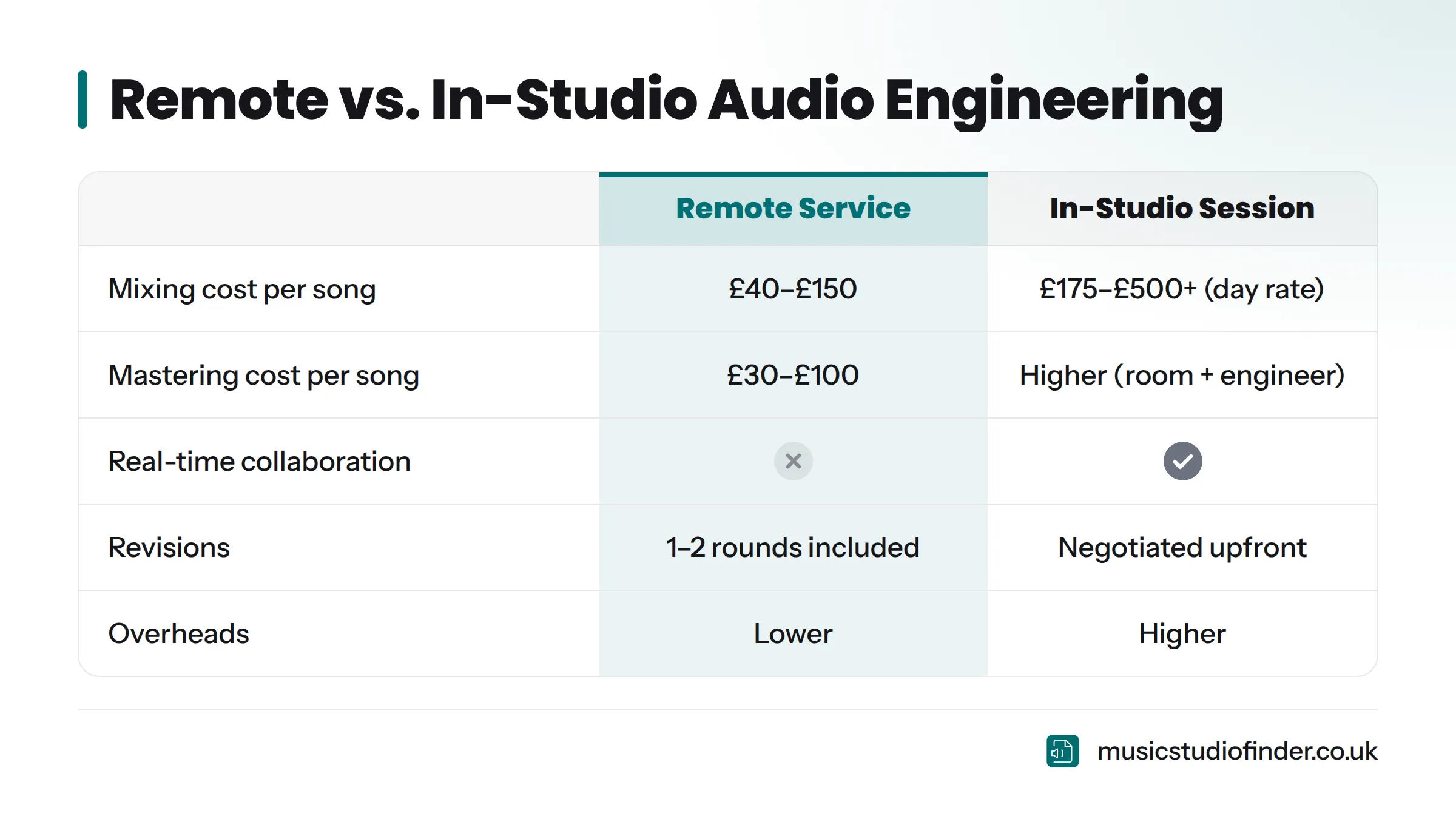
Online mixing and mastering services - where you send your files digitally and receive a finished mix or master - are almost always cheaper than in-studio equivalents. Without travel costs, studio hire, or face-to-face session time, engineers can operate with lower overheads and pass some of that saving on. Expect:
- Remote mixing per song: £40–£150 (mid-market), rising to £200–£400 for established engineers
- Remote mastering per song: £30–£100 (mid-market), rising to £100–£200+ for specialist engineers
Platforms like SoundBetter and AirGigs list remote engineers at a wide range of price points. For comparison, engineers listed on Music Studio Finder often offer both in-studio and remote options, so you can compare directly.
In-Studio Session Rates
In-studio mixing or mastering costs more because you are paying for the engineer's time, the room, the equipment, and the collaborative process. Many artists find the creative dialogue of a live session worth the premium - especially for first albums or when the production direction is still evolving. In-studio session day rates run £175–£500+ depending on the engineer's tier and location.
Understanding recording studio costs in the UK separately from engineer fees will help you budget the full picture accurately.
What You Get for Each Model
| Feature | Remote Service | In-Studio Session |
|---|---|---|
| Cost | Lower | Higher |
| Real-time collaboration | No | Yes |
| Revisions policy | Usually included (1–2 rounds) | Negotiated upfront |
| Turnaround time | 3–10 days typically | Same day or next day |
| Access to engineer's specific gear | Limited | Full access |
| Geographic flexibility | Unlimited | Local or travel required |
What Affects the Cost of Hiring an Audio Engineer?
No two quotes are identical. Here are the main cost drivers to understand before you approach an engineer.
- Experience and reputation: As the experience table above shows, tier alone can multiply the cost by 5x or more.
- Specialism: Mastering engineers often charge more per hour than live engineers because of their specialist monitoring environments and niche skills.
- Location and travel: London premiums are real. Travel outside an engineer's home city typically adds mileage costs - most UK engineers use HMRC's approved 45p per mile rate for the first 10,000 miles - plus accommodation and per diems for multi-day gigs.
- Project complexity: Stem count, number of songs, number of revisions, and turnaround time all push costs up. A 10-stem mix is half the work of a 48-stem mix.
- Equipment and software ownership: Engineers who own their own outboard gear, plugin licences (Waves, iZotope, FabFilter), and portable recording rigs factor those costs into their rates.
- Revision policy: Some engineers include two rounds of revisions in their per-song fee; others charge per revision after the first. Always confirm this in writing before you start.
- Studio hire: When a freelance engineer does not have their own room, studio hire is usually passed through to the client at cost. Check whether the quote includes room hire or not.
- Demand and availability: A busy engineer in a busy city can charge more. Booking at short notice often costs more too.
- BECTU rate card guidance: For broadcast and film work, BECTU publishes negotiated minimum rates that set a recognised floor for professional fees.
What BECTU Rate Cards Actually Tell You About Audio Engineer Pay
BECTU - the Broadcasting, Entertainment, Communications and Theatre Union - is the UK's primary trade union for creative workers, including sound and audio engineers in broadcast, film, and theatre. Its rate cards are negotiated agreements between BECTU and major employers, and they serve as the most authoritative published benchmark for professional audio engineering rates in the UK.
Here is what the rate cards cover and how to use them:
- What they cover: BECTU rate cards set minimum daily and weekly rates for a range of broadcast and production roles, including sound recordists, production sound mixers, boom operators, and dubbing mixers. They are most directly applicable to film, television, and commercial broadcast work.
- What they do not cover: BECTU rate cards are not binding for freelance studio sessions, live event PA work, or independent mixing and mastering. They serve as a reference point and moral floor, not a legal minimum outside union-covered contracts.
- 2026 rates: BECTU's most current rate cards (available directly from bectu.org.uk) show daily rates for experienced broadcast sound engineers typically in the range of £250–£450 for BECTU-covered productions. Junior and trainee rates sit lower, around £180–£250 per day.
- How to use them: If you are a freelance engineer quoting for broadcast or commercial work, BECTU rate cards give you a defensible benchmark to cite if a client pushes back on your rates. If you are a client commissioning broadcast audio work, they tell you the recognised professional minimum.
The Music Producers Guild and the APRS do not publish fixed rate cards in the same way, but both organisations can connect members with industry guidance on fair professional fees.
Real-World Cost Examples: What Will Your Project Cost?
Rate tables are useful. Worked examples are more useful. Here is what different types of projects realistically cost in 2026, based on current UK market conditions.
Recording a Single
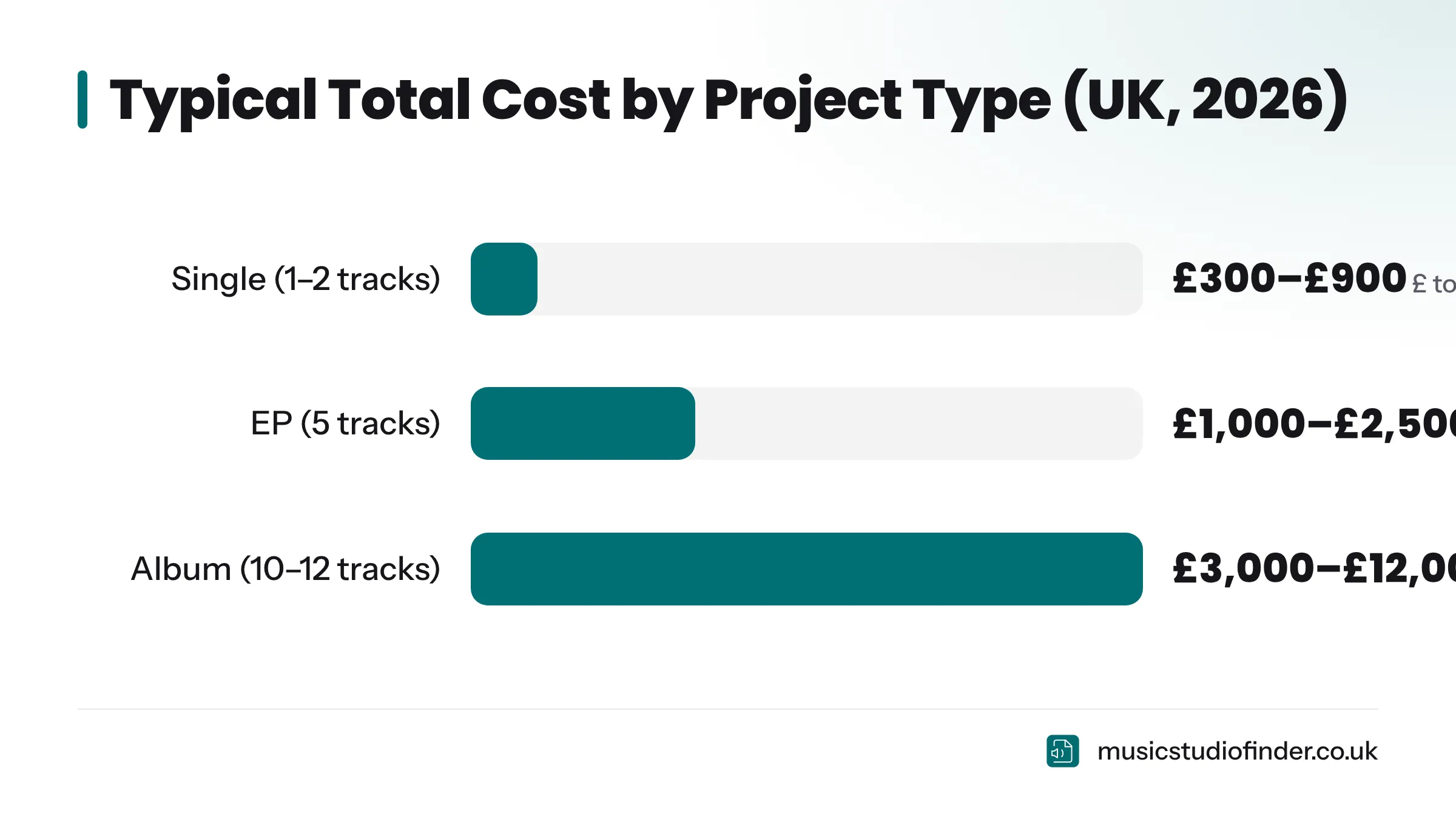
A band or solo artist recording a single (one or two songs) in a mid-level UK studio with a house engineer typically spends:
- Studio hire + engineer (included): £200–£500 for a full day
- Freelance recording engineer (if hired separately): £150–£300 day rate
- Mixing (per song, remote): £80–£150
- Mastering (per song): £60–£120
- Total typical range: £300–£900
If you are working with a top-tier mixing engineer, the mix alone can cost £200–£400 per song.
For more detail on what a full recording session involves, the studio session prep checklist is a practical starting point.
Recording an EP
A five-track EP recorded over two or three studio days with a mid-level engineer, mixed remotely, and mastered as a bundle:
- Studio hire (2–3 days, mid-tier room): £400–£900
- Recording engineer day rate (if separate): £150–£300 × 2–3 days
- Mixing (5 songs × £80–£150): £400–£750
- Mastering (5-song bundle): £200–£500
- Total typical range: £1,000–£2,500
The full picture of EP recording costs in the UK breaks this down further.
Recording an Album
A full album (10–12 tracks) with professional engineers at each stage is a significant investment:
- Studio hire (5–10 days): £1,000–£4,000+
- Recording engineer: £750–£3,000 depending on days and tier
- Mixing (per-track or album deal): £800–£3,000
- Mastering (album bundle): £400–£1,500
- Total typical range: £3,000–£12,000+
Top-tier productions with award-winning engineers in London studios can exceed £20,000. For independent artists, album recording costs in the UK range from £3,000 to £8,000 for a professional but not major-label result.
Live Sound for a Small Venue Gig
A three-piece band playing a 150-capacity venue in Manchester or Leeds:
- FOH engineer (day rate): £150–£250
- Travel: £20–£60
- PA hire (if not included with venue): £100–£300
- Total typical range: £200–£500 (excluding PA if venue provides it)
Live Sound for a Mid-Size Event (up to 500 People)
A corporate event or festival stage with separate FOH and monitor engineers:
- FOH engineer: £200–£400
- Monitor / foldback engineer: £180–£350
- Travel and per diems (both): £60–£150
- PA system hire (if separate): £400–£1,500
- Total typical range (engineers only): £400–£900
In London, add 20–40% to those engineer fees.
Podcast Production
A weekly 45-minute podcast recorded remotely, edited and mastered per episode:
- Recording (remote, self-recorded with guidance): Minimal or zero
- Editing and noise reduction per episode: £50–£120
- Mastering for streaming per episode: £20–£40
- Total per episode: £60–£150
- Monthly retainer (4 episodes): £200–£500
For Freelance Engineers: How to Set Your Rates in the UK
If you are a freelance audio engineer, knowing what to charge matters as much as knowing how to mix. Here is a practical framework for 2026.
Step 1: Calculate Your Minimum Viable Day Rate
Work out your monthly personal and professional costs - rent, software subscriptions (Pro Tools, plugin licences), equipment maintenance, public liability insurance, and tax provisions. Divide by the number of working days you can realistically bill each month (typically 12–16 for a freelancer who accounts for admin, travel, and downtime). That figure is your floor. Never quote below it.
A rough formula: (Monthly costs ÷ billable days) × 1.3 (the 1.3 multiplier covers tax and unpaid admin time).
Step 2: Research Your Local Market
Check what engineers at a comparable level charge in your city. Look at listings on Music Studio Finder, Upwork, and SoundBetter to calibrate. For broadcast work, check the BECTU rate cards for your production type. Use the regional table in this guide as a cross-reference.
Step 3: Decide What Your Rate Includes
Your rate should be clear about what is and is not included. Standard inclusions: your time, your DAW, and your plugin suite. Standard exclusions: studio hire, travel, accommodation, per diems, and revision rounds beyond an agreed number.
Step 4: Quote for Projects, Not Just Hours
Per-song or per-project fees are more profitable for experienced engineers than hourly billing. When you have a reliable workflow, a flat fee rewards your speed. Build in a reasonable number of revisions - two rounds is industry-standard - and charge clearly for additional rounds.
Step 5: Know When to Increase Your Rates
Raise your rates when you are fully booked more than three weeks out, when you gain significant new credits, or when your costs increase materially. A 10–15% annual increase is reasonable for established engineers in a rising cost environment.
Step 6: Agree Everything Before You Start
Before any project begins, confirm in writing:
- Total fee and payment schedule (deposit upfront, balance on delivery)
- Number of revision rounds included
- Formats of deliverables (WAV, MP3, stems)
- Turnaround time
- Credit and usage rights
- Travel and expenses policy
- What happens if the project scope changes
The difference between a smooth project and a painful one almost always comes down to what was agreed in writing at the start.
This video from The Business of Audio covers the rate-setting question directly and is worth 9 minutes of your time if you are building your freelance pricing strategy:
How to Find and Hire an Audio Engineer in the UK
Finding the right engineer starts with knowing where to look and what to ask. Music Studio Finder lists verified studios and engineers across the UK, with real listings in every region - from Edinburgh to Belfast, Manchester to Cardiff - so you can compare options without having to cold-email strangers.
Here is how to evaluate any engineer before you book:
Check their portfolio. Ask for links to released work in a genre close to yours. A mixing engineer who specialises in acoustic folk may not be the best fit for heavy metal production, regardless of their overall skill level.
Read reviews. Real client feedback matters more than a well-designed website. Look for specifics: communication, turnaround time, openness to direction, and quality of revisions.
Understand what the quote includes. A low per-song fee that excludes revisions can cost more than a mid-range fee that includes three rounds. Get clarity before you agree.
Ask the right questions. Before booking, confirm:
- What DAW do you work in, and what plugins do you use?
- How do you handle revisions, and how many are included?
- What is your typical turnaround time?
- Do you work with stems only, or can you receive raw session files?
- Do you have references from similar projects?
Red flags to watch for:
- No portfolio or willingness to share work
- Vague or evasive answers about revision policy
- Quoted fees dramatically below market rate with no explanation
- No written agreement or invoice before work begins
- No clear communication about what formats you will receive
The guide on how to choose a recording studio covers related questions if you are booking a full session rather than hiring a freelancer independently.
For engineers working across different roles, understanding the distinction between a music producer and a recording engineer is worth clarifying before you describe your project brief.
Frequently Asked Questions About Audio Engineer Rates in the UK
How much does an audio engineer charge per hour in the UK? Most UK audio engineers charge £25–£80 per hour in 2026, depending on their specialism and experience. Live PA engineers tend to sit at the lower end (£25–£60), while mastering and broadcast engineers sit at the upper end (£50–£90). Hourly billing is less common than day rates or per-project fees for most specialisms.
What is the typical day rate for a sound engineer in the UK? A sound engineer's day rate in the UK ranges from £120 for an entry-level live engineer outside London to £500+ for an established broadcast or studio engineer in a major city. The mid-market day rate across all specialisms sits around £175–£350 in 2026.
How much does a recording engineer charge for a studio session? A freelance recording engineer typically charges £150–£350 per day in the UK. Many studios include a house engineer in their room hire rate, so check whether the studio you book provides an in-house audio engineer before budgeting a separate fee.
How much does a mixing engineer charge per song in the UK? Mixing engineers in the UK most commonly charge per song rather than per hour. In 2026, per-song mixing fees range from £50–£80 for emerging engineers to £150–£250 for mid-level professionals, and £300–£600+ for top-tier engineers with major credits.
How much does mastering cost in the UK? Mastering typically costs £50–£200 per song in the UK in 2026. A full album (10–12 tracks) with a professional mastering engineer costs £300–£1,200 depending on the engineer's experience and whether they use an analogue or purely digital signal chain.
How much does a live sound engineer charge for a gig? For a small-to-mid-size live event in the UK, expect to pay £120–£300 per day for a freelance live sound engineer, plus travel and per diems. In London, the average booking cost runs around £230. Large events or festival stages with separate FOH and monitor engineers will cost £400–£900 or more in combined engineer fees.
What is the average cost of hiring a sound engineer in London? Based on current market data, the average cost of hiring a live sound engineer for an event in London is approximately £230, with the full range running from £120 for smaller bookings to £400+ for larger or more complex events. Studio-based engineers in London charge at the upper end of their respective specialism ranges.
Are audio engineer rates different outside London? Yes. London rates are consistently 20–40% higher than equivalent rates in most other UK cities. Manchester, Bristol, and Birmingham sit closest to London in pricing. Scotland, Wales, Northern Ireland, and smaller English towns and cities offer the most competitive rates in the UK.
What is the average salary of a sound engineer in the UK? For employed sound engineers, Prospects.ac.uk reports typical mid-level salaries of £25,000–£40,000 per year, with experienced engineers reaching £50,000+. The freelance equivalent of a mid-level engineer's annual earnings, working 15 billable days per month at £200 per day, works out to approximately £36,000 per year before tax and expenses.
What do BECTU rate cards say about sound engineer pay? BECTU publishes negotiated minimum rates for broadcast and production roles. For experienced sound engineers working on BECTU-covered film and TV productions, the 2026 rate cards indicate daily rates in the range of £250–£450. These do not apply to freelance studio, live event, or independent mixing work, but they serve as a widely recognised professional benchmark.
Does stem count affect the price of a mix? Yes. Most mixing engineers price based on the number of stems or tracks they receive. A simple mix of 10–15 stems will cost less than a complex session with 40–60 or more tracks. Always tell a mixing engineer how many stems you are bringing when asking for a quote.
Is remote mixing cheaper than in-studio mixing? Generally, yes. Remote mixing engineers have lower overheads - no studio hire, no travel - and those savings typically translate into lower per-song fees. Remote mixing in the UK commonly costs £40–£150 per song at the mid-market, compared to £100–£250+ for in-studio mixing sessions.
How should a freelance audio engineer calculate their day rate? Start with your monthly personal and professional costs (rent, software, equipment, insurance, tax provisions). Divide by the number of billable days you realistically work per month (usually 12–16). Multiply the result by 1.3 to account for unpaid admin and tax. That is your minimum viable day rate. Add a margin that reflects your experience and market position.
What should be agreed before hiring an audio engineer? Before any project begins, confirm the total fee and payment terms, number of revisions included, deliverable formats, turnaround time, travel and expenses policy, and credit arrangements. Get everything in writing - even a brief email confirmation protects both sides.
How do I know if an audio engineer's quote is fair? Compare the quote against the rate tables in this guide for the engineer's specialism, experience level, and region. Ask what the fee includes - particularly revisions and formats. Check their portfolio and reviews. If the quote is well below market rate, ask why; if it is above, ask what specifically justifies the premium.
What questions should I ask an audio engineer before booking? Key questions include: What is your revision policy? What DAW and plugins do you use? Can I hear recent work in my genre? What is your typical turnaround? What formats will I receive? Do you have references? And: is studio hire included or separate?