Yes - and most studios across the UK actively want you there. You do not need a record deal, years of experience, or any technical knowledge to book a session. What you need is solid preparation, a basic sense of what to expect, and the willingness to show up.
If you have been delaying your first booking because you are worried about wasting money or looking out of your depth, this guide is for you. Let's walk through everything - from what actually happens in the room to what it will cost - so you can walk in ready.
What "Professional" Actually Means in a Studio
The word "professional" describes the equipment, the environment, and the people running the session - not the experience level of the musicians who come through the door. A professional studio is built around industry-standard acoustic treatment and signal flow, high-quality microphones, and a DAW (Digital Audio Workstation) such as Pro Tools by Avid, Logic Pro by Apple, or Ableton Live. None of that requires you to arrive with studio experience. It means the room is built to capture your performance as cleanly and accurately as possible.
Professional studios operate with trained staff, acoustically treated rooms that reduce unwanted reflections, and equipment that is maintained to a consistent standard. That infrastructure exists to serve the people recording in it.
Most studios divide their space into three areas: the live room, where musicians perform; the vocal booth, a smaller isolated space for vocals or quieter instruments; and the control room, where the engineer manages the session behind the mixing desk. These spaces are designed to produce the best possible audio regardless of whether you are recording your hundredth album or your first demo.
Many independent studios - particularly those listed on Music Studio Finder - work with beginner musicians regularly. First-timers are a normal, expected part of the client mix.
What Engineers Actually Expect From You
Here is the honest view from the other side of the glass: engineers do not expect perfection. They want someone who is prepared, communicative, and willing to take direction. Making nervous first-timers feel comfortable and getting a solid take out of them is a routine part of the job.
What slows sessions down is not nerves or beginner mistakes or asking basic questions. It is arriving without knowing your material. Turn up with your parts locked in and you will earn the engineer's respect immediately.
What Happens During a First Recording Studio Session
Not knowing what to expect is one of the biggest sources of anxiety for first-time studio users. Here is a clear walkthrough of a typical beginner session. The professional recording session guide on Music Studio Finder covers each stage in more detail.
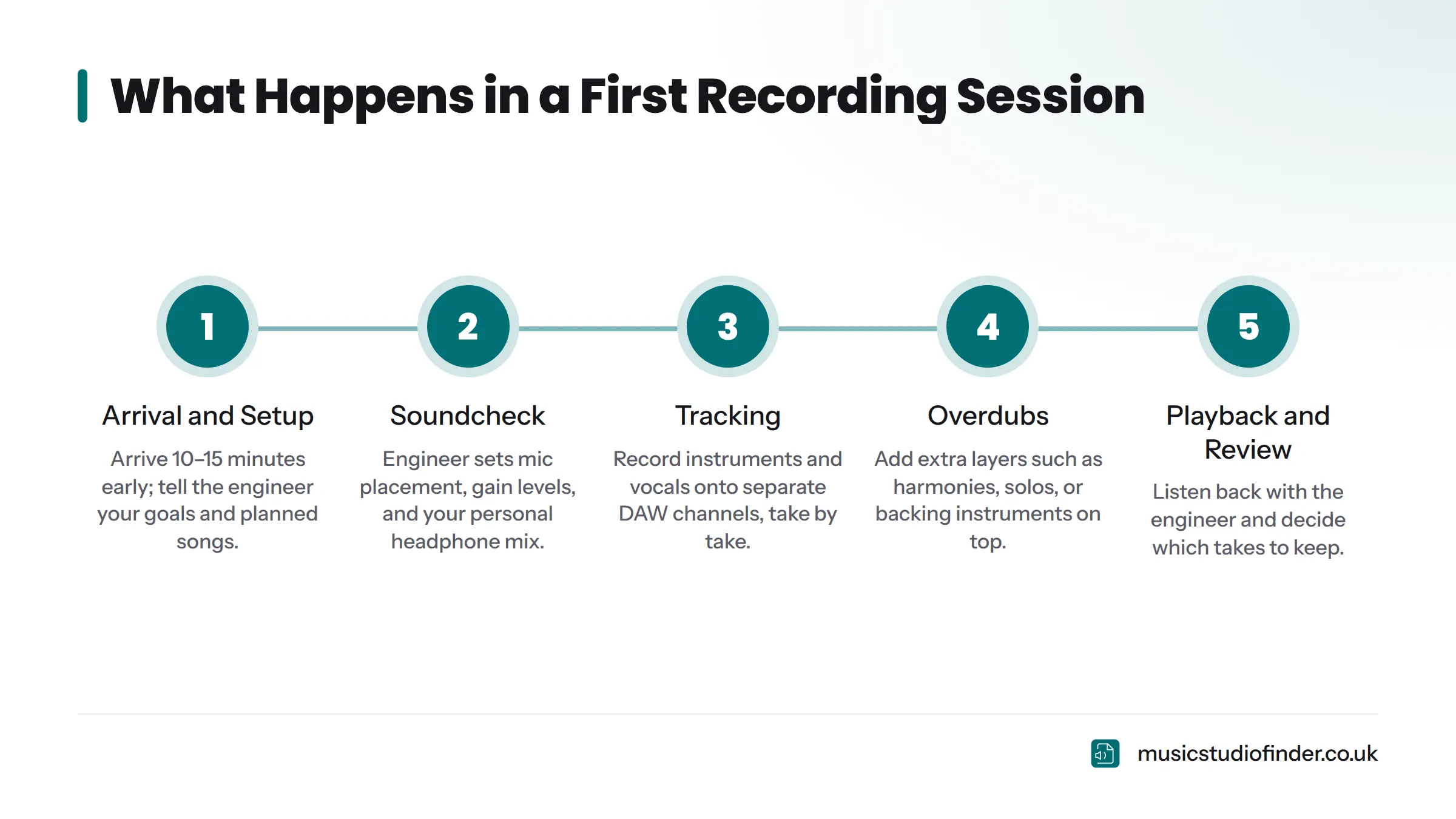
Arrival and Setup
Arrive 10-15 minutes before your booked start time. The engineer will greet you, show you around, and ask what you want to record. This is the moment to mention your experience level, the songs you plan to track, and any specific sounds you are aiming for. The more you tell them upfront, the smoother the session will run.
Soundcheck and Getting Your Levels Right
Before any recording starts, the engineer sets up your signal chain - microphone placement, instrument connections, and gain levels. You will play or sing a short section so they can calibrate the input and check that nothing is distorting. You will also receive a headphone mix - the blend of sounds you hear while performing. If you need more of your own voice, less reverb, or a different balance, say so. This is your session.
Tracking
Tracking means recording individual instruments or vocals onto separate channels in the DAW. You will perform your part - usually the full song or section by section - while the engineer captures each take. Expect to record several passes. Your first take is almost never the one that gets used, and that is completely normal.
Overdubs
Once the main performance is captured, you may record overdubs - additional layers added on top of the original, such as a harmony vocal, a guitar solo, or a backing instrument. The engineer will cue you in and tell you when they are recording.
Playback and Review
Listening back to what was recorded is one of the most satisfying parts of the process. The engineer plays the takes through studio monitors and you evaluate what worked. If a specific bar or phrase needs fixing, they may suggest a punch-in - re-recording just that section rather than running the whole song again.
Wrap-Up
At the end of the session, the engineer saves and backs up your files. Depending on what is included in your hire fee, you may receive a rough mix on the day or tracks prepared for a separate mixing session. Ask in advance what you are getting - stems, a rough mix, or a finished mix - so there are no surprises at the end.
How to Tell If a Studio Is Right for Beginners
Not every studio is equally suited to first-time recording artists. Most UK independent studios actively welcome beginner clients, but knowing what to look for before you book will save you both stress and money. The how to choose a recording studio guide goes into much more detail on the decision-making process.
Questions to Ask Before You Book
Ask these directly before you commit:
- Do you work with first-time or beginner recording artists?
- Will an engineer be present throughout the session?
- Can I listen back on the day, or do I need to book a separate mixing session?
- Is there a minimum booking length, and what is your cancellation policy?
- What DAW and recording setup do you use?
- Can I visit or have a quick phone call before I book?
- Are there additional costs beyond the hourly rate - for example, mixing, mastering, or file delivery?
A studio that answers these questions clearly and patiently is one that respects beginner clients.
Signs a Studio Welcomes Beginners
- Reviews describe the engineer as patient or experienced with new artists
- The studio offers short booking blocks (2-3 hours rather than minimum half-day commitments)
- The website uses plain language rather than technical jargon
- Testimonials mention first sessions or debut recordings
- The team reaches out before the session to understand your goals
Studios such as Hohm Recording Studio in Bradford, HQ Recording Studio in Leicester, and Offbeat Recording Studio in Edinburgh are examples of independent UK studios with approachable setups that suit first-time artists well. You can browse beginner-friendly options across the UK at Music Studio Finder's recording studio listings.
Red Flags to Watch For
- The studio dismisses your questions or makes you feel like a nuisance before you have even booked
- Engineers will not discuss the session setup in advance
- Minimum bookings of 8+ hours with no flexibility
- No reviews or testimonials from newer artists
- Pricing that is unclear, or unexpected charges after the session
How to Prepare for Your First Recording Studio Session
Preparation separates a session that goes smoothly from one that feels like a waste of money. The full preparation guide for your first studio session covers this in depth. Here are the steps that matter most for first-time recording studio users:
- Practise until the part is automatic, not just memorised. Know your song so well that you could play it half-asleep. Studio nerves will affect your performance, so your baseline needs to be solid before you arrive.
- Know your song's tempo, key, and structure. The engineer may ask for the BPM or whether you need a click track. Have these details ready.
- Contact the engineer before the day. Send a quick email or call to explain what you want to record, your experience level, and the sound you are going for. This saves time and helps the engineer prepare.
- Arrive at least 10 minutes early. Late arrivals eat into your paid session time. Give yourself buffer time to find the location and settle in.
- Come rested and hydrated. Tired voices crack. Tired musicians fumble. Sleep costs nothing.
- Know the full arrangement of every song. If you are recording with a band, every member should know every section - including the planned ending, any key change, and any breakdown.
- Keep your song list tight. More on this shortly, but one strong, well-recorded track is worth far more than five mediocre ones.
What to Bring
Pack these before you leave. A more thorough list is available in the what to bring to a recording studio session guide:
- Your instrument (if not provided), freshly maintained with new strings or reeds as appropriate
- A USB drive or cloud storage access for receiving your files
- Written lyrics and chord charts
- A priority-ordered song list (most important first)
- Headphones (some studios prefer you use theirs, but your own are a comfort option)
- Water and throat lozenges if you are singing
- Your booking confirmation and the studio's address
- A tuner, picks, capos, or any small accessories specific to your instrument
- The BPM for each song if you are using a click track
How to Work With a Sound Engineer as a Beginner
The engineer is not there to judge you. Their job is to capture your performance in the best possible light. Knowing how to communicate with them clearly will make your session faster, less stressful, and more productive. Good recording studio etiquette starts with honest, specific communication.
You Do Not Need Technical Language
Plain descriptions work perfectly well. Instead of "the high-frequency response feels over-bright in the upper mids," just say "it sounds a bit harsh and tinny - can we make it warmer?" Engineers translate plain feedback into technical adjustments every day. Describe what you hear, not what you think the setting should be.
Phrases that work well:
- "It feels a bit flat - can we add some warmth?"
- "The reverb is pushing the vocal too far back. Can we bring it closer?"
- "The headphone mix is too loud on the drums - can I have more of my vocal?"
- "That take felt good to me - what did you think?"
Asking for Another Take
Just ask. "Can we go again?" is something engineers hear dozens of times every session. There is no quota on takes during a tracking session - the goal is to capture something you are both happy with. If you feel you can do better, say so. If you are unsure, ask for a playback and decide together.
What Engineers Think About Beginner Sessions
From an engineering perspective, beginner sessions are often more straightforward than working with experienced but inflexible artists. First-timers tend to be open to direction, willing to try different approaches, and genuinely engaged in the process. What tends to frustrate engineers is unpreparedness: not knowing the song, arriving with poorly maintained instruments, or arguing against technical advice without reason.
Giving and Receiving Feedback
When the engineer makes a suggestion about your tuning, timing, or phrasing, treat it as professional input rather than personal criticism. They are listening from a control room with studio monitors calibrated for accuracy. If you want to try something your own way first, say so calmly: "Can I try it my way once and then we can compare?" Most engineers will respect that.
Give your own feedback specifically. "I don't like it" gives the engineer nothing to work with. "The vocal is too buried in the mix and I can't hear the consonants clearly" gives them something they can act on.
Managing Nerves in the Recording Booth
Almost every musician - beginner and professional alike - feels nervous when the red light comes on. The performance you nailed in rehearsal can suddenly feel like it belongs to a different person. This is not a sign that you are not ready.
Music performance anxiety is well-documented. Adrenaline narrows focus, raises heart rate, and tightens the body - the opposite of what you need for a relaxed vocal or a fluid guitar take. Knowing this in advance helps. You are not uniquely anxious; you are human.
Practical Ways to Stay Calm
- Breathe before each take. Three slow, deep breaths bring your heart rate down and refocus your attention.
- Use a warm-up take. Ask the engineer to let you run through the song once before officially rolling. Many studios build this in automatically.
- Reframe the red light. It is not a spotlight of judgement. It is a signal that the machine is listening. Perform to the song, not to the equipment.
- Accept imperfection early. Your first session is unlikely to produce a perfect track, and that is completely normal. The goal is a solid, usable recording.
- Take short breaks. If tension is building, ask for five minutes. Step outside, shake out your hands, drink some water. The time is yours.
How to Reset After a Bad Take
Every professional musician has recorded dozens of bad takes before finding the right one. When a take goes wrong, stop cleanly, let the engineer know, and ask to go again. Do not apologise excessively - it wastes time and puts more pressure on the next attempt. Reset, breathe, and go again. Treat each take as a completely fresh start, unconnected from what just happened.
What It Costs to Record in a UK Studio as a Beginner
Cost is one of the most common concerns for first-time studio users. Here is an honest breakdown of what you can expect to pay across the UK in 2026. The detailed recording studio cost UK guide covers pricing in full.
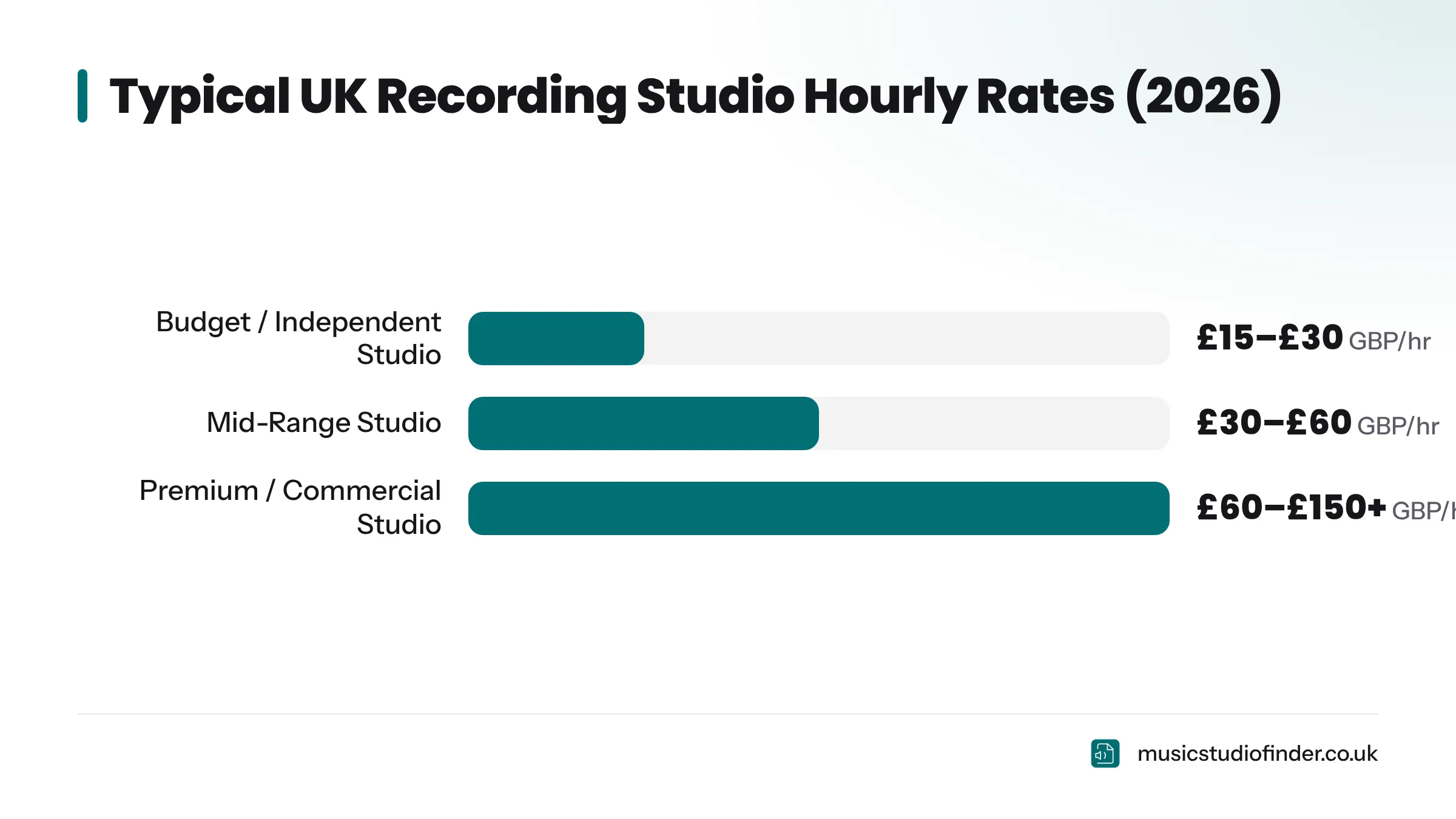
Typical Hourly Rates
| Studio Type | Typical Cost (GBP/hr) | What's Usually Included |
|---|---|---|
| Budget / Independent Studio | £15-£30/hr | Engineer, basic equipment, DAW session |
| Mid-Range Studio | £30-£60/hr | Engineer, full tracking setup, rough mix |
| Premium / Commercial Studio | £60-£150+/hr | Producer, mixing, mastering, full production |
For a beginner recording a single track or demo, a budget or mid-range independent studio is almost always the right starting point. You get professional equipment and a trained engineer without paying for services you do not yet need.
How Many Hours Should a Beginner Book?
This question causes real anxiety for first-timers, and it deserves a straight answer. The right amount depends on how complex your songs are and how well-rehearsed you are, but a reliable starting point is:
- 1 song, well-rehearsed, solo artist: 2-3 hours
- 1 song, band recording, well-rehearsed: 3-5 hours
- 2 songs, solo artist, moderately rehearsed: 4-6 hours
- EP (3-5 songs), experienced artist: Full day (8+ hours) or multiple sessions
The how many hours to book in a recording studio guide breaks this down by song type, arrangement complexity, and mixing requirements.
As a first-time recording studio user, book slightly more time than you think you need - an extra 30-60 minutes is usually enough. Running over your booked time can be expensive and stressful. Running under it just means you leave early with your money's worth intact.
What the Hire Fee Typically Includes
Most UK studio hire fees cover the engineer's time, use of the studio's equipment (microphones, leads, stands, monitors), and the DAW session with your recorded files. What is frequently not included unless specified: mixing, mastering, or file delivery in specific formats. Read what's included when you hire a recording studio before you book.
Always confirm in writing: "What will I receive at the end of the session, and in what format?"
Common Beginner Mistakes - and How to Avoid Them
Most of these are easily avoidable with a bit of forewarning.
Arriving Underprepared
This is the single biggest mistake, and the one that wastes the most studio time. Studio time costs money by the hour. Arriving with a shaky command of your material means you spend paid time working out parts you should have resolved in rehearsal.
Beginner Mistake Alert: The number one thing that wastes studio time is arriving before your parts are truly locked in. Even one extra rehearsal session before your booking can save you hours - and pounds - in the studio.
Booking Too Little Time
Many beginners underestimate how long recording actually takes. Setup, soundcheck, multiple takes, playback, and conversation with the engineer all eat into the clock. If you book two hours for three songs, you will almost certainly run short. For your first session, keep it to one or two songs.
Dismissing the Engineer's Advice
Engineers hear things you cannot hear from inside the performance space. If they tell you your guitar is slightly out of tune or your timing rushed in the chorus, listen. Their job is to make you sound your best. Overriding their advice without reason is a fast track to a recording you will not be happy with.
Trying to Record Too Much
Your first session is not the place for a ten-track album. Managing nerves, learning the studio workflow, and performing your material is already a significant cognitive load. Keep the song list short. One strong, well-recorded track is worth more than five mediocre ones.
Not Knowing When to Stop
At some point in a session, fatigue sets in and the takes stop improving. If your voice is tired, your fingers are sluggish, and the recordings are not getting better, the session is done. A good engineer will tell you. Listen to them. There is no value in grinding through exhausted takes - you will only record something you are unhappy with.
Professional Studio vs. Recording at Home: A Practical Comparison
This is a question that comes up constantly, and the honest answer is that it depends on what you need and where you are in your musical journey. The full breakdown in the recording studio vs home studio guide goes into considerable detail, but here is a quick decision framework.
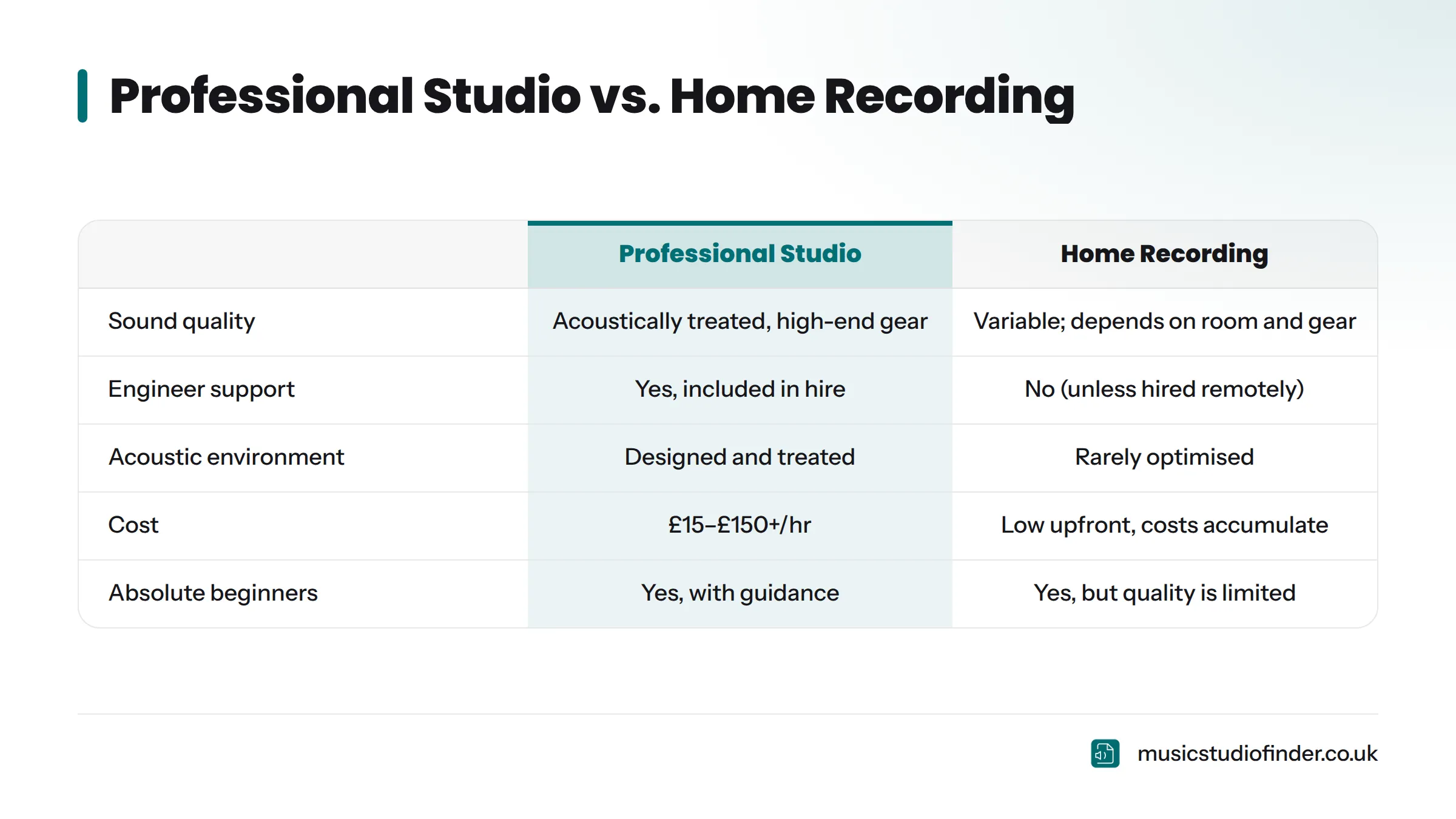
| Factor | Professional Studio | Home Recording |
|---|---|---|
| Sound quality | Acoustically treated, high-end equipment | Variable; depends heavily on room and gear |
| Cost | £15-£150+/hr | Low upfront (gear), but costs accumulate |
| Engineer support | Yes - included in hire | No (unless you hire one remotely) |
| Acoustic environment | Designed and treated | Rarely optimised for recording |
| Turnaround time | Session-based | Work at your own pace |
| Best for | Singles, demos, EPs, albums | Demos, songwriting, practice recordings |
| Suitable for absolute beginners | Yes, with guidance | Yes, but output quality is limited |
When a Professional Studio Makes Sense for Beginners
A professional session is worth it when you want your music to sound as good as it possibly can - for a release, a showcase, a competition entry, or simply to hear what your songs sound like at their full potential. The engineer's ear and the room's acoustics will do things for your recording that a bedroom setup cannot replicate.
When Home Recording Makes More Sense
If you are still writing and arranging your material, or if you want to experiment without the clock running, home recording is a perfectly valid option. Tools like GarageBand give absolute beginners a free entry point to recording at home. The quality ceiling is lower, but the creative freedom is higher.
The Middle Ground: Rehearsal Studios
Some rehearsal studios offer basic live recording - typically a stereo room mix rather than multi-track recording - which is a useful, low-cost stepping stone before booking a full professional session. The recording studio vs rehearsal studio guide explains the difference and which option fits your current stage.
Studio Vocabulary Every Beginner Should Know
Walking in without understanding basic studio language can make you feel lost mid-session. Here is a concise glossary of the terms you are most likely to hear:
| Term | What It Means |
|---|---|
| Tracking | Recording individual instruments or vocals onto separate channels in the DAW |
| Punch-in | Re-recording a specific section to fix a mistake, without redoing the whole song |
| Overdub | Adding a new layer of audio on top of an existing recording |
| Monitor mix | The blend of sounds the performer hears through their headphones while recording |
| DAW | Digital Audio Workstation - the software used to record, edit, and mix audio (e.g. Pro Tools, Logic Pro, Ableton Live) |
| Dry signal | A recording captured with no effects or processing applied |
| Bounce | Exporting the finished mix as a single audio file (e.g. WAV or MP3) |
| Gain | The input level of a signal - how loud the sound is before it reaches the DAW |
| Take | A single, complete recording attempt of a song or section |
| Stem | An individual audio file for a specific instrument or group (e.g. drums stem, vocals stem) |
| Click track | A metronome signal played through the headphones to keep the performance in time |
| Rough mix | An early, unfinished mix created to give a sense of how the final track might sound |
Sound on Sound is an excellent resource if you want to go deeper into studio terminology before your session.
How to Find a Beginner-Friendly Recording Studio in the UK
Finding the right studio matters as much as preparing your material. The wrong studio - overpriced, impersonal, or poorly suited to your genre - can make your first session harder than it needs to be.
Look beyond the headline hourly rate. Search for studios that specifically mention beginner sessions, demo recordings, or first-time artists in their descriptions. Studios that actively support new musicians tend to say so, because it is a genuine part of their offer.
The how to find a recording studio near you guide walks through the full search process with UK-specific advice.
Music Studio Finder is the most direct way to find and compare recording studios across the UK. You can search by location, filter by studio type, and read reviews from real clients - including first-time recording artists. Whether you are in London, Edinburgh, Leicester, or Bradford, the recording studio search on Music Studio Finder lets you compare options side by side. You can also browse The Recording Studio London for city-based options or find affordable recording studios across the UK using the dedicated cost-focused search.
When reading reviews, look specifically for mentions of how the engineer treated new or nervous clients. Phrases like "patient," "helpful," "explained everything," and "made me feel comfortable" are strong positive signals. Be cautious of studios where reviews mention feeling rushed, being left without guidance, or encountering unexpected charges.
Frequently Asked Questions
Will the sound engineer judge me for being a beginner?
No. Professional engineers work with musicians across the full spectrum of experience, and first-time clients are a routine part of the job. What they care about is whether you are prepared and communicative - not how many sessions you have done before.
Do I need to be signed to a label to use a recording studio?
Not at all. Anyone can book a recording studio. Independent musicians, unsigned artists, hobbyists, podcasters, and voiceover artists all use professional studios. You simply pay the session rate and book your time like any other service.
Can I bring friends or bandmates to the session?
Yes, in most cases. Check with the studio in advance, as some have capacity limits for the control room. Bandmates performing in the session are expected. Guests and supporters are usually welcome but should stay out of the engineer's workflow and keep the atmosphere calm.
What if I'm not happy with the recording?
Talk to the engineer during the session rather than after. If something does not sound right on playback, ask to redo the section before you leave. Once you walk out with the files, the session is effectively over. If the finished product falls short of your expectations, contact the studio calmly to discuss your options - many will offer a discounted return session to address genuine concerns.
Do I need to bring my own instrument?
Most studios ask you to bring your own instrument for acoustic recordings, since your tone is unique to your specific guitar, violin, or brass instrument. Studios typically have a backline of amps and drums available for rock and pop sessions - confirm this in advance. Vocalists do not need to bring a microphone; the studio provides these.
How many songs can I record in one session?
As a beginner, target one song per two to three hours of studio time. You can record a professional song in one day if you are well-prepared, but for a first session, keep expectations modest. One polished, well-recorded track is a better outcome than three rushed ones.
What if I make a lot of mistakes during recording?
Mistakes are part of the process - that is precisely why studios record multiple takes. If you keep stumbling in the same place, the engineer may suggest a punch-in to fix just that section rather than re-recording the whole song. Reset, breathe, and go again.
Is it cheaper to record at home?
The upfront cost of home recording gear can seem low, but the cumulative investment in an audio interface, condenser microphone, acoustic treatment, headphones, studio monitors, and DAW software adds up quickly. For a one-off demo or first recording, a few hours in a budget studio (£15-£30/hr) is often more cost-effective than building a home setup from scratch. For long-term, frequent recording, home setups become more economical over time.
Can I book a studio as a solo musician with no band?
Yes, and solo bookings are extremely common. Many studios record solo vocalists, singer-songwriters, solo instrumentalists, and podcast hosts. You do not need a full band to justify a professional session. If you are recording a fully produced track, you can bring pre-made backing tracks or discuss session musicians with the studio.
What age do you have to be to use a recording studio?
Most UK studios have no minimum age requirement for adults. For younger musicians, studios typically ask for a parent or guardian to be present or to sign the booking agreement. Some studios specialise in young or student artists - worth seeking out if you are booking for someone under 16. The Musicians' Union has guidance on young musicians' rights and participation in professional environments that is worth reviewing.